Update about blog

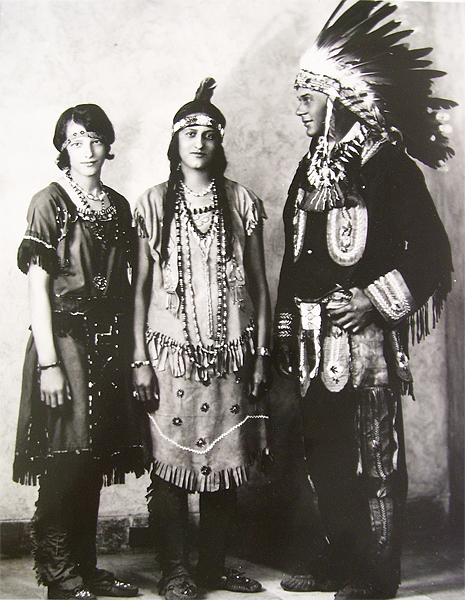
photo from the internet
Showing posts with label Nansemond Tribe. Show all posts

Thursday, November 23, 2023

Native American Heritage Day


National Native American Heritage Day is observed on November 24, 2023, a day after Thanksgiving. 

This day is different from Indigenous Peoples’ Day on October 24th. The Friday after Thanksgiving, American Indians are accorded special honor, and their rich cultures, accomplishments, contributions, and heritage are celebrated. The history of America begins with Native Americans. We can learn more about their culture and speak out against the grave injustices they have experienced by visiting: https://nationaltoday.com/native-american-heritage-day/. 

HISTORY OF NATIVE AMERICAN HERITAGE DAY

Dr. Arthur C. Parker of the Seneca nation first protested for National Native American Heritage Day between 1912 and 1915. At first, he was fighting for an “American Indian Day” to be recognized within the Boy Scouts of America. In 1990, President George H. W. Bush signed into law the legislation introduced by Congressman Joe Baca, to designate the day after Thanksgiving as American Indian Heritage Day. The law was established on November 28 as a day to pay respects to the Native Americans for their numerous contributions to the United States. The American Indian Heritage Day was supported by the National Indian Gaming Association (NIGA) and 184 federally recognized tribes.

The Native American Heritage Day encourages Americans of all backgrounds to appreciate the indigenous cultures appropriately, with ceremonies and activities. Schools are also encouraged to enhance their students’ awareness of Native Americans by providing classroom activities focused on their history, contributions, and achievements. 

The United States House of Representatives initially passed the Native American Heritage Day Act of 2009, with technical adjustments made by a collective consent in the United States Senate. The House of Representatives unanimously voted to pass the legislation again, including the Senate’s adjustments. The legislation was then signed into public law by President Barack Obama on October 30, 2009.

Native American Heritage Day and Month is a huge platform for Indigenous people to educate society about their communities. On this day, more than ever, they lead the discourse on culture, celebrate their heritage by donning traditional footwear (“rocking the moccasin”), and shed some light on the diverse tribal communities.

.--------------------------------------

 Nansemond Indian Nation Fights for Their Namesake River


Our Bass ancestry goes back to this tribe. Our great grandmother was Elizabeth "Bettie" Bass Rogers.


Friday, August 8, 2014

National recognition of our tribe?

More news articles from earlier in 2014 about the Native American tribe of Nansemonds, from whom my Rogers family has descended through my great great grandfather, Col. Richard Bass. I started a year ago HERE, and several following posts are about my Native American connection.

This post also will talk about false pretenses..


Bill to recognize Nansemonds passes committee

Published 9:14pm Wednesday, April 2, 2014

A bill that would extend federal recognition to the Nansemond Indian Tribe and five others in Virginia passed the (US) Senate Indian Affairs Committee on Wednesday.

The tribes also include the Chickahominy, Eastern Chickahominy, Upper Mattaponi, Rappahannock and Monacan.

“I just hope we can finally get there,” Nansemond Indian Tribal Association Chief Barry Bass said on Thursday. “It’s been a long, hard road.”

The bill has passed the Senate Indian Affairs Committee before, but a vote in the full Senate has been blocked by senators who believe the tribes should have to go through the Bureau of Indian Affairs as other tribes have done.

But recognition through the bureau’s administrative process requires documentation that current tribal members have a continuous line of descent from the historical tribes. That has been difficult, if not impossible, for Virginia Indians to prove, in part because of Walter Plecker, who was the registrar of Virginia’s Bureau of Vital Statistics from 1912 to 1946. He replaced “Indian” with “black” for the race on many birth and death certificates that passed through his office, ensuring that no official documentation exists for many tribal members to prove their relationship to ancestors.

“Federal recognition of the Chickahominy, Eastern Chickahominy, Monacan, Nansemond, Rappahannock and Upper Mattaponi tribes of Virginia is long overdue,” Sen. Mark Warner said in a press release. “Members of our Virginia Indian tribes are both part of the history of the Commonwealth and valued members of our present and should be recognized as such.”

“Committee passage of this legislation is a critical step toward granting these six Virginia tribes the recognition they deserve,” Sen. Tim Kaine said in the press release. “These tribes are an integral part of Virginia’s history and identity, and it is both troubling and tragic that they have never been recognized by the United States, even when more than 500 other Indian tribes have been granted recognition.”

NansemondLogo Keziash Elizabeth Tucker Bass

Time for recognition

Published 9:58pm Friday, April 4, 2014


...Virginia has officially recognized Virginia’s Indian tribes, but the U.S. Senate has a chance now to finally make amends with them for Pleckerism. (see above)  Recognition of the tribes in Virginia — the first people Europeans encountered upon reaching the New World and the first people to call this place home — would help restore the identity that a truly hateful and bigoted man began tearing from them a century ago (Walter Plecker)
 Federal recognition would send a message that the nation is also proud of these First Peoples, their heritage and the important place they hold in Virginia’s — and the nation’s — history.

Source: http://www.suffolknewsherald.com/2014/04/04/time-for-recognition-3/
(underlines and bold typeface by BRogers)


I'm submitting this post to Sepia Saturday this week, where the topic does include false pretenses (which is this man's charged offense).  


I'd say Pleckerism definitely qualifies, and certainly was criminal, even unto the seventh (How many?) generations that follow and aren't recognized as American Indians.

...............................................................................................................

I personally find it interesting that still, if a persons parents are white and black, they automatically become black on various pieces of paper.  If American Indian and white, they become American Indian, and if American Indian and black, Pleckerism continues and they are usually considered black.

You don't have to wear a white hood and burn crosses to continue white supremicism. Racism is still an ugly truth in our lives today.  I live in the south still.  

I wonder how things are in the UK and Australia?

Wednesday, August 6, 2014

Nansemond Indians recognized in parade

 As I mentioned last post, my Rogers family has roots including the Nansemond Indians of Suffolk, VA, a small tribe among those who welcomed the first Western Europeans to the shores of North America in the 1600s.  Chuckatuck is apparently the community where the new American Indian village, Mattanock, will be built by the Nansemonds (see last post).

Last year there was a celebration including Chief Barry Bass...


Chuckatuck looks back — and ahead

Published 9:59pm Saturday, October 26, 2013

This was the...
second annual Founder’s Day in Chuckatuck, VA, with parade and speeches, children singing, and an antique car show....

 Folks lined Kings Highway for the parade to the Chuckatuck Volunteer Fire Department building. The event’s grand marshal, Chief Barry Bass of the Nansemond Indians, dressed in full regalia, and was driven by Jamie Bradshaw....

Fittingly, (co-chair of event, Kitty) Martin said, "Chief Barry Bass of the Nansemond Indians has been selected as the event’s grand marshal.  We wanted him to be a part, because their land is a part of our community,” she said, referring to 70 acres the city recently conveyed to the tribe, where it plans to develop an educational tourist attraction, Mattanock Town, recreating the tribe’s 1600s village that was located near the site.

Invited up to say a few words, Chief Bass said he was honored to have been selected as grand marshal. “It’s great being here,” he said.
Mayor Linda T. Johnson cited the 1600s Native American village the Nansemond tribe plans to build on 70 Chuckatuck acres recently conveyed to the tribe by the city.
“With Mattanock Town coming to Chuckatuck, we are just going to grow and become a very special place,” she said. “We already are, but it’s going to get better and better.”
  http://www.suffolknewsherald.com/2013/10/26/chuckatuck-looks-back-and-ahead/


Monday, August 4, 2014

Mattanock Town

Let's spend a moment or two catching up (perhaps) with the events and connections which I found about a year ago.  The Rogers family, through my great-great grandfather, Col Richard Bass, are descendents of the Nansemond Indians of Virginia, who are currently located in Suffolk, VA.  The tribe has a bit of a problem being recognized by US Congress...still.

But here are some articles the Suffolk News Herald has published in the last year.  I'll limit each day to one topic.


Surrounded by city officials, Nansemond Indian Tribe Chief Barry Bass signs a ceremonial document at the Aug. 17 2013 powwow.

Home again

Published 8:49pm Wednesday, September 25, 2013A step forward. A swoop of the pen. And just like that, the Nansemond Indian Tribe had its land back.
Except it didn’t happen just like that. European settlers forced the tribe off its land in the early 1600s, and the tribe didn’t start the process of trying to get it back until nearly 400 years later.
Once they started, there were planning meetings. City Council meetings. Unsuccessful votes, and more meetings.
Finally, the vote came. 7-1, but it was enough. The tribe had its ancestral land back.
Then came more meetings, lawyers, more votes. It was a long road to Aug. 17, 2013, when at the end of Pembroke Lane, under a tent, Chief Barry Bass stepped forward along with city leaders to sign his name to a ceremonial document. The actual deed had been recorded in the courthouse two days before.
Gifts were exchanged, here on this ground where hesitant contacts with European settlers resulted sometimes in gift exchanges, sometimes in death.
A monument was unveiled, here on this ground where the tribe’s ancestors once built their longhouses and kept gardens.
A celebratory powwow began, here on this ground where the tribe’s ancestors danced and drummed so long ago.
The mayor and the chief walked into the dance circle side by side, here on this ground where America’s long history of racial hostility began.
Soon the tribe hopes to change the land, which has been a city park for many years, into a development called Mattanock Town, named for its village that was near the site.
Here on this land, there will be longhouses once again. Gardens once again. Tribal crafts once again. A native burial ground once again.
Here on this land, Americans will learn rather than kill. Teach rather than conquer. Contribute rather than steal. Help build rather than burn down.
And the Nansemond Indian Tribe will once again have its own village.
http://www.suffolknewsherald.com/2013/09/25/home-again/ 

Saturday, August 17, 2013

The Native connection


The Nansemonds have said that the book which is not considered accurate uses the surname Tucker to refer to the original Indians who married Western European settlers.  They seem to discount that name, and say any time Kesiah Tucker comes up as Elizabeth Bass's name, it stems from the book that isn't accurate.  But that had been her name as daughter of the Chief of the Powhatans.
 
If one book calls her that name, however, it seems to me that it is just like an alias, not to be discounted completely.  I see throughout the family tree, other women named Kesiah, which must be in honor of that matriarch.  So the book could not have been wrong about her having that other (Indian) name.  It probably would not have been acceptable if the family were strict Christians however.

And I haven't yet researched the religious affiliations of my ancestors...if any is known.  Early Virginians belonged to the Church of England, which became the Episcopal Church later in America.  It wasn't until near the Revolutionary War that Baptists petitioned for their own religious freedom.

The 10,000 name petition (dated 16 October 1776) has been digitized at the Library of Congress website. It was signed by people from all over Virginia who wanted an end to persecution of Baptists by the Established Church. Baptists and Baptist sympathizers alike signed the petition.
  And there were also Quakers in the Suffolk area as well.


Incidentally, the wife would be in charge of the household meals, bedding, clothing and child rearing, but at some point the families probably moved out of the long houses of the tribe and into cabins like the Europeans had.  I wonder when that happened.  Somehow I think it took several generations.

And especially important to remember about this family, and this tribe, is the persecution from the white culture.  No wonder they moved from VA to NC, and then TX.

Powhatan style home in Williamsburg,VA

http://cova-inc.org/resources/edu_ark_viintro.html
This link is for a resource kit.  Very well done archeological background of Virginia native peoples.

the best research link I’ve found is: 
site has lots of original document links.

More History From http://encyclopediavirginia.org/Nansemond_Tribe#start_entry 

Time Line

  • December 1608 - Christopher Newport returns to England from Jamestown accompanied by the Indian Machumps. John Smith, meanwhile, attempts to trade for food with Indians from the Nansemonds to the Appamattucks, but on Powhatan's orders they refuse.
  • Early September 1609 - John Smith sends Francis West and 120 men to the falls of the James River. George Percy and 60 men attempt to bargain with the Nansemond Indians for an island. Two messengers are killed and the English burn the Nansemonds' town and their crops.
  • June 1611 - Sir Thomas Dale leads a hundred armored soldiers against the Nansemond Indians at the mouth of the James River, burning their towns.
  • August 14, 1638 - John Bass, who may be the son of Nathaniel Basse and Mary Jordan Basse, marries Elizabeth, a Nansemond woman who has converted to Christianity.
  • 1792 - The Nansemond tribe sells its last known reservation lands, 300 acres on the Nottoway River in Southampton County.
  • 1850 - The Indiana United Methodist Church in Chesapeake is founded as a mission for the Nansemond Indians.
  • March 20, 1924 - Virginia passes the Racial Integrity Act, a law aimed at protecting whiteness on the state level. It prohibits interracial marriage, the only exception being a marriage between a white person and a person with one-sixteenth or less Indian blood.
  • 1930 - The General Assembly passes a law defining Virginia Indians as those possessing one-quarter or more of Indian blood and less than one-sixteenth of black blood. The law also stipulates that such people will be considered black unless they live on a segregated Indian reservation.
  • February 20, 1985 - The Nansemond tribe is formally recognized by the General Assembly in House Joint Resolution 205.

My Bass Family Tree,


My grandfather (my father's father): George Elmore Rogers, Sr., born in Galveston, Texas, died in Houston, Texas.


His mother: Elizabeth Bettie Bass Rogers (1860-1924) (my great-grandmother) born in Old Waverly, San Jacinto County, Texas, died in Galveston,Texas


Her father: Colonel Richard Bass ( 1819-1880) born in Perry County, Alabama, died in Waverly, Walker County, Texas.

Not my great great grandfather, but a Confederate pioneer

His father: John Bass (1784-1820) born in Wayne County, NC, died in Perry County, Alabama.

Not John Bass, but a portrait from 1800s

His father: Edward Bass (v.1761-1802) (birth date and place not yet substantiated, could be Craven or Wayne County, NC; He died in Wayne County, NC.


Not Edward Bass, but an outfit worn around 1770
Sarah Bass 1764-1849 (the death date isn't the same as Edward's wife, but the birthdate is right)


His father: Richard Bass (1732-1793) born in Craven County, North Carolina. He died in Wayne County, North Carolina (SEE note below about Waynesborough)    He also was in the Revolutionary War, but I'll talk about that when I honor his birthday.


Not my relative...George Romney's Young Man with a Flute wears a gold figured waistcoat under his coat, Dallas Museum.

His father: Andrew Bass (1698-1770) born in Norfolk Independent City, Nansemond County, Virginia.

His father: Richard Taylor Basye (1658-1722) born in Norfolk Independent City, Nansemond County, Virginia

His father: John Basse (1616-1699) born in London, Middlesex County, England,  and WIFE: Elizabeth Basse, (a.k.a. Kesiah Tucker, Native American), (1618-1676) born in Kecaughton, Nansemond County, Virginia

NOTE on Richard Bass and Waynesborough... Wayne County NC was the place Richard Bass died in 1793.  His uncle Dr. Andrew Bass, b.1735, d. 1791, apparently was one of the early founders of Waynesborough, as per Wikipedia
Prior to 1730, Native Americans were the only known occupants of the territory now known as Wayne county. Settlers trickled into the territory, but there was no general movement of immigration until after 1750. Wayne County was established on November 2, 1779 from the western part of Dobbs County. It was named for "Mad Anthony" Wayne, a general in the American Revolutionary War.  By 1782 the commissioners were named. In 1787 an act was passed establishing "Waynesborough on the west side of the Neuse River on the land of Doctor Andrew Bass where the courthouse now stands."

... Waynesborough grew quickly into a bustling town. Its location along the Neuse River promoted plantation growth and successful river boat businesses. Stage coaches brought much activity and many passengers to the town, many of whom enjoyed the local taverns.
Built just over a mile away in 1839, the Wilmington-Weldon Railroad led to the emergence of Goldsboro, a town built directly along the tracks. Residents of Waynesborough began to move their homes and businesses into the new town. Within a decade, Waynesborough declined and never again recovered. By 1865 only five buildings remained in Waynesborough, all of which were burned by Union Forces in the Civil War.
Union Church, Old Waynesborough, NC
There's now an effort to establish Old Waynesborough as a tourist attraction.  Don't miss the irony of the building above depicted, after the Union Army had destroyed all the buildings remaining in Waynesborough, so my question is, where did this church come from?  Maybe built right after the Civil War?

I'm 11 generations removed from a full blooded Native American ancestor.  That doesn't give me a very big percentage.  And I'm not forgetting that most of my ancestors were Western Europeans mainly from England.  I just have learned about great grandmother, Bettie Bass' grandmother however many times removed, Elizabeth Tucker Basse, and am thrilled.


Wednesday, August 14, 2013

Chapter three Native American roots


Thelma Dennis, Pocahontas Cook, Walter Bradby(?)
Pamunkey Tribe
Richmond, Virginia, c.1920
Virginia Historical Society, Foster Collection # 27610


Nansemond Pow Wow dancer


Nansemonds and Suffolk city council work on terms for Mattanock Town project


SUFFOLK VA:The city and the Nansemond Indian Tribal Association have signed an agreement that clears the way for the transfer of city park land to the tribe for an Indian cultural center and tourist attraction.
The signing was announced by the city late Thursday. The agreement broke a deadlock that threatened the tribe's plans to build Mattanock Town, a replica Indian village on 71 acres in city-owned Lone Star Lakes Park.
The city's announcement said keys to the property were handed to tribal leaders following the signing.
Going back in earlier articles shows the efforts that have taken place since the town agreed to the idea proposed by the Nansemonds.