Now we’re in the part of the list most “healthiest beans” articles quietly skip. Plain cooked soybeans carry the most protein of anything ranked here, a serious 16.9 grams, plus a field-leading 4.8 milligrams of iron and a 274.3 score, all per 100 grams. That’s not a nudge past the pantry beans. That’s a different weight class.
Simmer them into a Japanese-style nimono, fold them into a hearty stew, or blend them into a spread. They’re denser and richer than a standard pulse, so a smaller scoop goes further.
White Beans
Transparency note before the praise: the federal dataset doesn’t break out navy, Great Northern, or cannellini as separate beans. They’re all folded into one “white beans” bucket, so treat this as the whole white-bean family, not one specific variety.
As a group they’re a mineral powerhouse, topping the entire list on potassium at 497 milligrams, with a 222.6 score at 211 calories per 100 grams, measured from canned and reduced-sodium. Creamy, mild, endlessly useful. Smash cannellini into a Tuscan-style rosemary spread, or drop navy beans into a brothy soup with kale. This is the bean that makes cheap ingredients taste expensive.
Black Beans
If this were a fiber contest, we could stop right here. Black beans deliver the most fiber of anything on the list, a hefty 9.8 grams, next to a 218.5 score at 178 calories per 100 grams, measured from canned with fat. That fiber is a big reason a bowl of black beans and rice feels filling and steady instead of gone in twenty minutes.
Tacos, a smoky black bean soup, a burrito bowl with lime and cilantro. It’s the bean I reach for most, and the numbers say that instinct is fine.
Chickpeas
Hummus, falafel, the crunchy roasted snack you physically cannot stop eating. Chickpeas are the extrovert of the bean world, and they’ve got the numbers to back the confidence: a 217.1 score with a strong 162 micrograms of folate at 163 calories per 100 grams, measured from dried with no added fat.They also hold their shape better than almost anything else, which is why they survive a hot oven and a long stew without dissolving. Roast them crisp with smoked paprika, blend them into hummus, or drop them whole into a coconut chickpea curry.
Pinto Beans
The soul of a burrito and the reason refried beans exist. Pintos score 213.6 with 152 micrograms of folate at 191 calories per 100 grams, measured from dried with a little fat. Nothing here spikes and nothing’s weak, which is exactly why they’re the default bean in so many kitchens. Mash them with cumin for tacos, or simmer a pot borracho-style with onions and peppers.
Lentils
Not technically a bean to a botanist. Absolutely a bean to anyone standing in a kitchen, so they’re staying.
Here’s their case. Among the beans here that aren’t soy, lentils lead on iron at 3.3 milligrams, and they pull it off at just 115 calories, the lowest of anything ranked here, measured from dried with no added fat. Add 171 micrograms of folate and a 210.9 score and you’ve got the efficiency winner, big nutrition for a small calorie footprint.
Red lentils melt into a silky dal. French green lentils hold their shape for a warm salad with roasted vegetables and feta. Same aisle, two completely different textures.
Black-Eyed Peas
The good-luck bean. New Year’s Day, a pot of Hoppin’ John, the whole superstition. Their real headline is folate, 184 micrograms, one of the highest here, wrapped around a 205.0 score at 166 calories per 100 grams from dried. They cook fast and stay a little firm, so they shine in a cold marinated salad with diced tomato, red onion, and vinaigrette that only gets better the next day.
Kidney Beans
The classic chili bean, and also the one on this list that comes with a real safety asterisk when it’s raw or undercooked.
Kidney beans score 192.8 at 177 calories per 100 grams, measured from dried with fat added. Cooked properly they’re a workhorse. Raw or undercooked, they’re a different story, and this is the one safety fact I want everyone to walk away with.
The one bean warning worth knowing: Raw kidney beans carry a natural toxin called phytohaemagglutinin (PHA). Food-safety authorities including the FDA note that raw beans hold far more of it than fully boiled ones, and eating even a small handful of raw or undercooked beans can trigger nausea and vomiting within a few hours.
The fix is easy: give them a hard, rolling boil before you do anything else. And skip cooking dried kidney beans in a slow cooker on their own, because it may never get hot enough to knock the toxin out. Canned beans are already fully cooked, so none of this applies to them.
Once they’re properly cooked, load them into a three-bean chili or a rajma over rice and forget the drama entirely.
Split Peas
Bottom of the list, and I’ll defend them anyway. A score of 152.9 sounds like a loss until you remember these turn into dinner for about a dollar a bag. Measured from dried with a little fat, they run 168 calories per 100 grams and stick to your ribs.
They fall apart when you cook them. That’s the point. Simmer them with smoked paprika and a bay leaf, or push them into a thick dal over rice.
===============
Why beans make you gassy (and the actual fix)
Time for the question everyone’s too polite to ask out loud.
Beans are high in a fiber-type carb called GOS (galacto-oligosaccharides). Your small intestine can’t break it down, so it travels to your colon, where gut bacteria ferment it and produce gas. That’s the whole mechanism. It’s not a flaw in you, it’s chemistry.
The easiest fix costs nothing: drain and rinse your canned beans, and toss the soaking water from dried ones. Ditching that liquid carries off a meaningful share of the GOS, which is often enough to take the edge off. Building up your bean intake slowly helps too. If beans reliably wreck you no matter what, that’s worth asking your doctor about rather than something a food article should diagnose.
------------------
Edamame
Yep. The bar snack. The thing you squeeze out of the pod and eat by the fistful is the healthiest bean on this entire board.
Edamame tops the ranking at 287.8, clear of every classic pantry bean, and its standout number is folate at a huge 286 micrograms, far above the rest of the field. All that for 140 calories per 100 grams cooked.
And you basically can’t overthink it. Steam the pods, hit them with flaky salt, eat. Or shell them into a grain bowl, a stir-fry, or a bright edamame and mint smash on toast.
The tastiest bean to eat mindlessly is also the one that wins on paper. That almost never happens.
-------------------------
I left out a few beans that I don't eat myself. After all, this blog is a reference that I hope will be around when I forget these details. I did edit the original article.
----------------------------
Written bySarah Rose Levy Covering vegetarian food, restaurants, and grocery finds across the U.S.
I haven't had a slow cooker in a while. Then Prime did it's special sales days, and I had a gift certificate which covered all but $3 of this gadget. Now I even have a pressure cooker, which can make yogurt too. Thanks to family who really gave it to me as a birthday present.
------------------
I had a great talk with our new UU minister, Rev. Jamie Boyce. It was kind of personal, but also I needed to find some helpers, so she channeled me towards the right people. I think I'd rather try a new mechanic for my old car based on their recommendations rather than FaceBook.
I find some science interesting to consider, from a creative viewpoint. I've been having some eye difficulty, and have a friend with another eye problem. Just saying, I'm interested in vision in a new way these days. So this article caught my attention.
------------
How pond algae led to a Nobel prize and a new way to study the brain
I'm enjoying thinking about an article I recently read, so here's an excerpt...
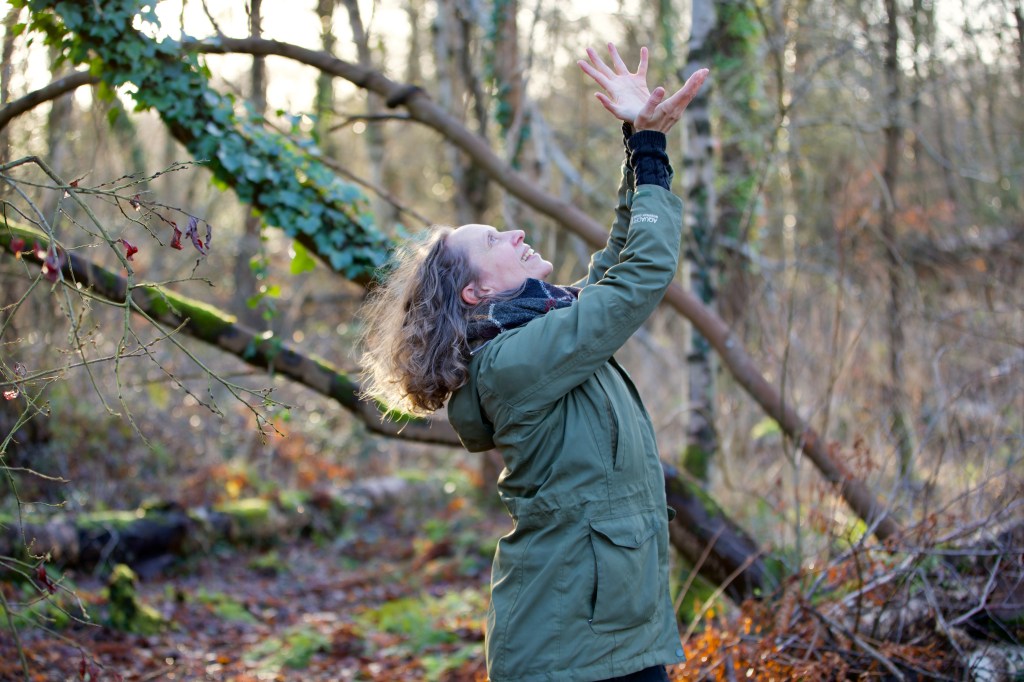
A question I’ve been exploring for most of my life is: what changes when we move our spirituality, or let movement become our spiritual practice? In this essay I offer some characteristics of a moving spirituality that I explored in my PhD and later in my book Dancing in the Muddy Temple: A Moving Spirituality of Land and Body.
Dove in the Branches. Image by Andy Murray
Movement is about Connection & Transformation
First of all, movement adds a different language for encountering the sacred. It’s not just ‘sitting still and emptying the mind’, or ‘dancing ecstatically’ (did you know that ecstasy means something like ‘having the god within’?).
Instead, it is a way of searching for and communicating with the layers of the seen and unseen world.… Recently I even start to see it as a way of encountering the mystery in the space between, between objects, emotions and thoughts.
Movement strengthens an immanent (instead of transcendent) spirituality that is expressed in our living, breathing body. Instead of still form mediation while the mind travels, movement mobilises our spine, (called the ‘Hollow Bone’ in some traditions), to enable receiving divine wisdom. Instead of consciousness travelling outward, beyond the corporeality of the body, we draw it in, and ‘wake up’ inside this interior reality where we are a spirit in a body. That way, we can experience the divine with literally just a movement away.
Movement also offers a way of ‘transforming’ states on the plains of the body, heart, mind and consciousness. A simple breathing exercise or repetitive gesture can help to transform different emotions. It’s like we are giving clear ‘direction’ to meditation in this way, by gently swaying from side to side, or calming our mental activity with a grounding movement from up to down. The combination of moving the spine in conjunction with conscious breathing seems to reset the nervous system more effectively than anything I know.
You may have read several years ago when I enjoyed practicing Feldenkrais movements. Slow and minimal body gestures and postures were different but somewhat like yoga...but mainly the awareness one gained was a big part of it. Muscle memories are wonderful.
I even remember some of the Tai Chi that I learned years ago.
This morning I watched a jogger running down the street below my apartment. I haven't ever been interested in that practice myself, but watch the rhythm of motion that those people enjoy.
Yes, movement and meditation are really great.
-----------------
Joy is our birthright. Each and every one of us, especially those of us who have been conditioned to feel unworthy of it.
RACHEL RICKETTS
------------
Change a Light Day (First Sunday in October)
Country Inn Bed & Breakfast Day (First Sunday in October)
Dick Tracy Day
eDay
Education Day (Kiribati)
Improve Your Office Day
Intergeneration Day (First Sunday in October)
International African Diaspora Day (First Sunday in October)
International Blessings of the Fishing Fleet Day - (First Sunday in October)
International Toot Your Flute Day
Kanelbullens Dag (Cinnamon Bun Day)
Lesotho Independence Day
National G.O.E. (Growth, Overcome, Empower) Day (Sunday of the First Full Weekend in October)
I try when I awaken at night, to remember something in nature that I saw that day. Fortunately I have house plants!
The first Peanuts comic strip debuted on October 2, 1950 and featured Patty, Shermy, and "Good ol' Charlie Brown!" Happy anniversary to these wonderful young people of all kinds!
When we were reading Peanuts in the papers daily, we might spend an evening watching 2 movies, a cartoon, and a news reel from the comfort of our cars. There was no grass there then!
There’s power in love to help and heal when nothing else can. There’s power in love to lift up and liberate when nothing else will. There’s power in love to show us the way to live.
Released in March 2009, One Second After was ranked as number 11 on the New York Times Best Seller list in fiction in May 2009
There have been several sequels to this novel, and the last book I tried unsuccessfully to read was about an elevator to the moon by the same author. It had been proposed decades earlier by another sci-fi author, and was deemed scientifically implausible due to atmospheric friction on the cables.
----------------
In questions of science, the authority of a thousand is not worth the humble reasoning of a single individual.
-Galileo Galilei, physicist and astronomer (1564-1642)
--------------
I'm continuing to watch the Prime series "Genius" about Einstein. It is kind of good, and kind of continues with the same theme of how hard it was for him to work in a world that didn't recognize his talents.
Today says I've been blogging since 2008! My first blog was Goddess in Clay. It's been completely dismantled, and no longer exists in the la-la land of blogs.
So I wrote a few months, then decided to expand and include posts of my own functional clay work...which I started making also in 2008. I had retired in 2007, and recovered enough to start working in the community studio in downtown Black Mountain NC.
Those first efforts were pretty sad, but I was not deterred. I had already studied ceramics and got a BFA many years before. I even spent many Saturday mornings in summers selling my wares at the Tailgate Market.
In the meantime, I would sit here at a computer (I think I've been through one CPU tower and am on my 3rd laptop) and read about other people's lives all over the world, and share little bits of my existence.
For me it was fun to have different topics for different blogs. And so the pottery one, where there used to be recognitions based on how many pottery posts were made in a year...evolved into all art...Alchemy of Clay.
And since people really responded to photos of the area I lived in...Living in Black Mountain was born (2013-2024) then finally retired as I focused more on this one, When I Was 69 (2013-present.)
However, I had other interests, and started Three Family Trees (2018-now) about my genealogy interests, and Open Yesterday's Pages (2024-26) about anything historic, and then Inner Workings started just last year for my more serious thoughts.
Then the opportunity came to move to live closer to one of my sons, and perhaps breathe better in drier conditions, so I moved to Durango CO, and within a month I knew I needed to start a new blog Life in Durango!
And I even tried at one time to write a blog about the clay studio, which I kind of let fall away after a while. Most of my blogs are still active, except maybe the goddess one...so I put goddesses in whenever I feel like it, wherever I'm writing. And I sure don't have anything to say on most of them, except this and the Durango one. I keep trying to skip this one...but hey, something is worth sharing, and boom, here I yam!
I enjoy interacting in comments...and making replies. I know few other bloggers do this, but that's ok. I do have busy days when I just barely read blogs at all...but there are seldom days where I don't connect to the www out there at all. I admit to being a blog-addict!
So when blogger started having problems last month or so, I was really worried. I've thought of this as a safe place to store all kinds of information. It's not just the social connections, it's an archive for me.
I know some of you have been blogging longer than I have, and it's really great to have those friendships. And I also have the sadness associated with those who have died, or just stopped blogging for some other reasons. I have a good-bye blog which will automatically post (if blogger so chooses) whenever I'm no longer able to write here. I just keep adding little bits to it, taking some off, and setting the publication date forward a few months time. So there might be a bit of silence before it finally is posted...and I imagine that's just the way it will have to be.