Update about blog

photo from the internet
Showing posts with label Emergence Magazine. Show all posts

Tuesday, October 28, 2025

Treasures of Texas and the seasons

Traces of Texas:

 I have posted about the fabulous Hexagon Hotel in Minerals Wells a couple of times, but never this photo. The hotel was built in 1895 by David G. Galbraith — the inventor of the paper clip and co-developer of acetate synthetic fiber. The twelve-sided hotel was clad in clapboard and set atop a solid stone foundation. Two English stonemasons handled all the stonework, likely including construction of the nearby DC power plant.

Inside, the rooms were hexagon-shaped, with each pair sharing a bathroom. The top floor served as a reading room, which was a popular amenity of the era, especially because whatever breeze their was could move through it easily when the windows were opened. The whole hotel was designed with exceptional ventilation. Its unique “honeycomb” structure was a marvel of comfort in the days before air-conditioning. The hotel officially opened for business in December, 1897.
Behind and to the left of the main building stood the hotel’s powerhouse — a stone structure that generated electricity for lights and ceiling fans (for an extra fee) in every guest room. The first floor also housed a steam laundry and ice house, while the second floor contained the hotel’s dining room.

From Traces of Texas FB page.


----------------

Another photo and story from the same FB site.


Traces of Texas reader Chelle graciously sent in this nifty 1940s photo of a waitress from LouAnn's in Dallas making a takeout delivery to a very special customer. LouAnn's was a legendary place from 1939-1970. Ann Bovis was the owner and she was quite a character. She opened it up as a restaurant, but it quickly evolved into a club. Ray Charles, Tommy Dorsey, Harry James, Lawrence Welk, Guy Lombardo --- all of the big acts of the 40s and 50s played there.
Said Ann in 1977:
“At first, it was the older crowd.They’d bring their kids in here and park them in booths with another couple and go out on the porch and dance. Then SMU found us. Before long we had to expand the dance floor.
In 1940 we had an elaborate 110 speaker sound system installed by RCA for $10,000. They were so excited by such a big sale that they threw in a free TV set, but it wasn’t much good because there was no TV station here until eight years later. By that time the set wore out from people fiddling with it.
“Mothers and fathers would call here all the time and ask me to go out and look to see if their son or daughter was here, without it being obvious as to what I was doing. I don’t care what the Liquor Control Board said, those kids were a lot better off down there with me than in some beer joint. Goodness knows we were doing everything we could. The girls would hide sloe gin in their girdles or between their legs. If the kids were from a good family, I’d just take the bottle away from them. A lot of the 16-year-old girls couldn’t even get permission to date unless the boy agreed to take them to Louann’s."
The above citations are from a 1977 interview in D magazine. Ann Bovis died in 1993.

-------------
Emergence Magazine has recently posted a very nice essay about changing seasons. The author, Holly Hayworth, apparently grew up near where I now live, speaking of the French Broad River of Southern Appalachia.

A Circling Story is an excellent read with a cup of your favorite beverage...as I enjoyed it myself.


Thursday, May 8, 2025

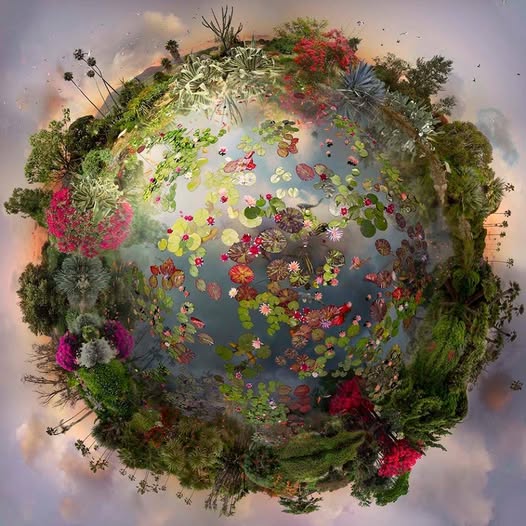
Our beautiful world

 I think this is lovely

By Catherine Nelson from the internet

For Thankful Thursday
And Floral Friday Fotos
---------------


The white flowers by the golfcourse.


Rhododendrons by the golf course


-----------------

Incidentally, the pneumonia came on  the very next day after I went to sit-r-cise. So maybe 1.) pushing myself isn't a good idea, or 2.) not wearing a mask and sharing breath with lots of older people - may give me these problems.  So I don't plan to attend any more.

But I do need to rehabilitate my lungs again! After the hospital stay, they gave me the antibiotic (Dicyclomine) which doesn't work any more, as well as continued a couple more days of steroids. So after a few days of trouble breathing, and vision difficulties, I asked for Levaquin again. The PA gave me a high dose for short time, so I took it while in Colorado. And still continued to nebulize every day, twice a day.

Levaquin has now been prescribed for another bacteria that showed in my lungs by a sputum test a couple of weeks ago (after I got home from my trip.)  I'm now on high dose for 2 weeks. So I'll be off it May 13. It has to be taken 2 hours before or after my other drugs. I tried taking it in the afternoon, and thought that was why I couldn't get to sleep. But now after taking it first thing in the morning, I have had 3 more nights of trouble getting to sleep.  Good thing I'm seeing my doctor next week for my physical.

It helps me to write this here, though I should move all the details to my personal blog. Since I can't do much of anything outside (sun sensitivity from antibiotic, thank you very much) and lack of breath for walking...I sit inside and listen to my Dan Brown book (Origin) on audio. It is somewhat tiresome to hear how convoluted he weaves his characters' lives and the cliff hangers of trials, but it's something to listen to while trying to be sleepy.

-------------


Looking through the glass door of the downstairs at the Lakeview Center


A town budget here in Black Mountain where I live hasn't been focused on repairing the Lakeview Center, where flood waters from Lake Tomahawk damaged the downstairs areas. And when the walls were cleared, damage from a previous fire was seen, so the repairs will be more extensive than first thought. A lot of seniors attended the town meeting before the budget was passed, but so far nothing has been done to help this community gathering place. The nearby golf course is also damaged, and the town published to residents to not try to mow the overgrown greens themselves, as they might damage them (or themselves.)


Unused golf course gives a nice view of the Black Mountains where the Blue Ridge Parkway runs.

As these scars remain on our landscape, many lives have yet to return to their necessary living status...though efforts to share resources continue. Once a week Bounty and Soul comes to my apartment complex to give away free produce (usually past it's "sell date" donated from nearby grocers). 

The other day I arrived early to pick up my still-available hot lunch at the closed senior center, provided for discount by the Council on Aging. I wonder how long that program will survive with the current political attitudes. Being early I saw a line of people formed in front of the closed pool shower building nearby...mostly Latinos. Cars would drive up and drop off another mom and sometimes a child or an infant, and they would join the line. 

I asked a man standing sort of separate from the others, "What's happening? 

He said they were there to pick up apples and things.

I asked the coordinator of our lunch program the same question. She said a church in Hickory had been coming once a week with free food ever since the hurricane.  I knew that the same area had provided hot meals for a long time after the hurricane.

Yes, Mr. Rogers was right. Look for the helpers.

--------------

Emergence Magazine sends out a newsletter to which I subscribe. Here's the short 12 minute film and poem about Being Part European. It shows many cultural artifacts housed in a warehouse. It's poignant and speaks to western civilization's privileged status.

--------------

Today's quote:

A harbor, even if it is a little harbor, is a good thing, since adventurers come into it as well as go out, and the life in it grows strong, because it takes something from the world, and has something to give in return.
 -Sarah Orne Jewett, poet and novelist (1849-1909)

--------------

I'm  also reminded of the empty US harbors since tRump enacted his ludicrous tariffs. The rest of the world may just going along blissfully while isolating the US.


==============


---------------


Hammer Creek in Lebanon County, Pennsylvania


--------------


Thrown and altered medium size pitcher.

Wednesday, July 24, 2024

Aloha ‘Āina

 From Emergence Magazine, a film that offers passion and love of the earth and our belonging to it.

Aloha ‘Āina

Directed by Adam Loften and Emmanuel Vaughan-Lee

“As someone who believes in transformation, as someone who believes in liberation, in ea, in sovereignty, in life, I think about the power of that imaginative space and what it offers for us if we honor it.”

Click here to go to film.

This film is art, that is all.

"Native Hawaiian poet Jamaica Heolimeleikalani Osorio opens a space where we can feel what it means to love the land."


Sunday, May 26, 2024

Breathing with the Forest

 Sharing an experience that you might not have expected today...

Breathing with the Forest link from Emergence Magazine


Breathing with the Forest

by Marshmallow Laser Feast
“Entering the forest, we step out of our separateness to embody something much more than human.”
What is it like to be one of the largest organisms that has ever existed? How does it feel to host a vast web of relationships that anchor an ecosystem? In our special interactive online adaptation of Breathing with the Forest, you are invited to open your senses to what it might be like to be a part of the hidden forces that flow through the trees and mycelial networks of the Colombian Amazon rainforest. Surrounded by an ensemble of birdsong, moving water, and insect chirr, and guided by narration from acclaimed British actor Colin Salmon, synchronize the rhythm of your own breath with the cycles of molecular exchange between soil, tree, and sky—finding where you end and the forest begins. 

Thursday, March 28, 2024

Put food on the table, a roof over your head, and...

 "Subsidence remains a threat, but it isn’t by any means our only or even our most urgent one. 

"Increasingly, we face those “serious world-wide environmental changes” scientists warned about more than fifty years ago: sea level rise, floods, erosion, more and stronger hurricanes, more and stronger floods, winter storms that plunge millions into freezing darkness for days, and threaten blackout for months—pollution, fires, droughts, extinctions. 

Lacy M. Johnson, in "What Survives" essay in Emergence Magazine


Blackfeet camp at night 2. Montana. 

Early 1900s. Glass lantern slide by Walter McClintock

Monday, March 4, 2024

Who cares about climate change?


 There is near-universal global public support for climate action, yet people systematically underestimate the commitment of their peers, according to a new study.

The research, published in Nature Climate Change, is based on a globally-representative sample of nearly 130,000 people in 125 countries.

It finds that 86% of people “support pro-climate social norms” and 89% would like their governments to do more to tackle warming. Moreover, 69% say they would be willing to contribute 1% of their income to addressing climate change.

Yet respondents also “systematically underestimate the willingness of their fellow citizens to act”, according to the paper, creating a potentially challenging “perception gap”.


This perception gap can leave us feeling hopeless and discouraged, but the reality is that the vast majority of people are on board with climate action. “This means that we can move the debate forward and focus on how we can best tap into this broad willingness to contribute [and] to best tackle the challenges posed by climate change,” said the study's authors.

As quoted by Katharine Hayhoe's "Talking Climate Newsletter"


Wednesday, February 21, 2024

From Emergence Magazine

 My Sunday newsletter offers a glimpse from the pages of this wonderful journal. This week there's an interesting conversation. I'll give the first few paragraphs, and you can follow the link (I hope.)


“Life fades into nonlife so gradually that it’s actually hard to locate a border, let alone police one.” — Merlin Sheldrake

What are the bounds of a self? Is a single redwood in a forest separate from its fellow beings, from the ferns and bats that inhabit its branches, the mycelial web underfoot? What about the lichen encrusting its bark, itself a composite of algal cells living among fungal filaments? Can we imagine a subjectivity for the wider forest ecosystem, the collection of selves that make it up? How might we define these entities’ agencies, interests, or rights? 

Honoring the Wild Proliferation of Earthly Perspectives

with Merlin Sheldrake and David Abram

In this conversation, cultural ecologist David Abram and mycologist Merlin Sheldrake explore the many kinds of selves that make up our world and reimagine the frameworks through which we define their rights and well-being. Published in partnership with the More Than Human Rights (MOTH) Project, Merlin and David’s discussion ventures past the realm of the known, entering a playful space of possibility that recognizes the inseparability of the fluxing multitudes that compose—and decompose—the biosphere.


DAVID ABRAM: 
"...We were all drawn together by our bodacious love and concern for the wider and much wilder community of earthly agencies, for the whole cantankerous collective of what you so aptly call “entangled life.” And this made for a very convivial gathering indeed, surging with reflective insights and conundrums, but one that also held space for grief—the grief that most of us were carrying in relation to the vast and unprecedented losses in the human and more-than-human community—and also for some music-making. Each of these are necessary ingredients for any sort of wisdom—for thinking, that is, not just with our abstract intellects, but with the whole of our creaturely selves, reflecting with the entirety of our feelingful, intelligent organisms. Our sensate bodies, after all, provide our sole access to all these other animals, to the plants and the fungi, to the rainforests, the rivers, the surging winds and the gathering storms.

MERLIN SHELDRAKE: I found this convergence enormously inspiring. I was left with a sense that interdisciplinarity is a superpower. This is a recurring theme in the history of life: by coming together, radically different organisms can extend their reach and achieve things that none of the individual players—whether bacterium, alga, fungus, animal, plant—could achieve by themselves. Lichens are wonderful examples of this. When a volcano creates a new island in the middle of the Pacific Ocean, the first things to grow on the bare rock are lichens, which arrive as spores or fragments carried by the wind or birds—likewise when a glacier retreats. Whenever it was that lichens occurred for the first time, their very existence implies that life outside the lichen was less bearable...." 

Here's the link to the whole conversation:

https://emergencemagazine.org/interview/honoring-the-wild-proliferation-of-earthly-perspectives/?utm_source=Emergence+Magazine&utm_campaign=fe3a5842d5-WildProliferations%E2%80%9420240218&utm_medium=email&utm_term=0_73186f6259-fe3a5842d5-357088886

Tuesday, February 6, 2024

Thinking of climate change still


Glacial Longings 

by Elizabeth Rush

“I wanted to stand alongside this unstable glacier, wanted to witness freshly formed bergs dropping down into the ocean like stones, so that I might know in my body what my mind still struggled to grasp.”

Source; emergencemagazine.org

This thought stayed with me all morning, before I wrote this. To have my body know what my mind is still struggling to grasp about climate change. Yes, that's just it.
--------------------------------------
I offer the good news from Katharine Hayhoe this week also...
The news these days is full of innovative climate solutions from every corner of the globe. From groundbreaking renewable energy records in Texas and China to Hawai’i's renewable paradise, it’s clear the tide is turning. Here are five places where change is happening.

In Belfast, Northern Ireland, nearly half of the city’s heavy vehicles — including garbage trucks and sweet sweepers — are now fueled by vegetable oil rather than gasoline or diesel. The city hopes to convert all its vehicles to sustainable fuels by 2031.
 
In Nigeria, the new president Bola Tinubu announced in his inaugural address he was phasing out fossil fuel subsidies. The subsidies amounted to nearly $500 million a month. Tinubu is “re-channeling the funds into better investment in public infrastructure, education, health care and jobs that will materially improve the lives of millions.”
 
This past weekend, Texas set a new record with 36 percent of the energy on its grid being generated by solar. That’s in addition to the third that’s already coming from wind. Meanwhile in China, it’s estimated that carbon emissions peaked in 2023 and are now on the decline, thanks to a record renewable energy installation. This past year alone, China installed more new solar energy than the U.S. has in its entire history. I think it’s time for Texas to catch up, don’t you?
 
Then there’s Hawai’i, where 33 percent of people already have rooftop solar panels, 15 percent of new cars sold are electric, and the state just replaced their last coal-fired power plant with a giant 185 MW battery that can release the same amount of electricity as the coal plant, but much faster.

The Not So Good News:
As climate impacts intensify, there’s no shortage of not-so-good news around the world, either.

In Australia, invasive fire ants are travelling to new areas by forming rafts to float on torrential flood waters. “Fire ants are more active before or after rainfall and can form large floating rafts which move with water currents to establish footholds in new areas,” says Reece Pianta from Australia’s Invasive Species Council. 
 
In Colombia, El Niño is driving the dry conditions that are leading to raging wildfires that currently threaten about half the cities in the country. It’s clear that climate change is playing a role, though. Not only is it warmer than it would be otherwise but a recent study has determined that climate change, not El Niño, is the primary driver for the drought currently impacting the Amazon river basin, including the southeastern part of Colombia as well as regions of Brazil, Peru, Venezuela, Ecuador and Bolivia. As always, climate change is a threat multiplier.
 
In Sierra Leone, climate change has exacerbated recent flooding and mudslides, leading to an uptick in human trafficking as people try to flee increasingly difficult circumstances at home. Many people have been lured to jobs abroad that turned out to be exploitative and not what they were promised. In the past three years, ”there has been an increase [in the number of people] and the vulnerability has increased too,” Christos Christodoulides, head of the UN Migration Agency in Sierra Leone, told Al Jazeera.

What you can do... she offers this:
Every day, we’re exposed to toxic fumes from the fossil fuels we use in our everyday lives. Electrifying our homes and appliances is a great way to improve our health, save money, and cut carbon pollution at the same time.

Rewiring America just came out with a handy Personal Electrification Planner that guides you through options tailored to your specific situation, whether you rent or own. The planner allows you to create a personalized electrification plan that aligns with your home, lifestyle, and your budget, and it's designed to be quick and user-friendly. If you live in the US, they also provide access to rebates offered under the Inflation Reduction Act, making the shift to electric more affordable.

Check it out and, as always, share what you learn with others around you!

Today's quote:

"We should treat all the trivial things of life very seriously, and all the serious things of life with sincere and studied triviality." Oscar Wilde

Tuesday, December 12, 2023

Beyond Human Intelligence

Consider what is intelligence.


Listen or read interview (link below) from Emergence Magazine with James Bridle, author of Ways of Being: animals, plants, machines: the search for a planetary intelligence.

I have a hold at the library here to maybe get to read that book. In the meantime, I listened to the interview, though sometimes I had trouble with James' accent. But I do still have a written text of it as well, in the Magazine, Vol. 4. (I wonder if there will be a Vol. 5.)

An Ecological Technology This link will have the audio version as well as written text.

I was particularly interested in his views on Artificial Intelligence.

And as I mentioned in a previous blog, I was reading the book: Eve: How the female body drove 200 million years of human evolution, by Cat Bohannon.  And coincidentally reading the chapter about the brain and intelligence, when I was able to listen to this interview with Bridle which urged me to consider other sources and kinds of intelligence.


The tree intelligence immediately came to mind. Then just the whole of life on earth, sharing together so many interdependent things. 


Wednesday, July 5, 2023

An incredible magazine

 I started getting a weekly newsletter from them, "Emergence." I'd read and sometimes quote the article which was highlighted each week. (Here)

They would talk about leadership training - in Australia. And the by then 4 volumns of the magazine. So I finally bought one, knowing I would share it with others.


What a publication! It's huge, and has full color photos not on slick paper. All the paper feels wonderful to the touch. And it's statement just floored me.


This edition deals with the apocolyptic climate change that is here, and how artists, writers, photographers and journalists see this transformation.


Well, I just per-ordered the Vol 4. edition, and the shipping has gone up by 50%. But the magazine itself is well worth its price.  Maybe I'll find the pennies to purchase Vol. 1 & 2 eventually. However, it's taking me a long wonderful time to read this, cover to cover. 

--------------------------------
AND

in case you missed the link to Katharine Hayhoe's talk, here's the info again

 ​I enjoyed hearing this talk by a climate scientist.

"Here is a public talk given on 29th of June 2023 by Canadian climate scientist Katharine Hayhoe at ETH Zurich."

It isn't a youTube video, so the only way I can share it is for you to go to the blog and see the original posting on Interim Arrangements...dated July 1.

Very interesting about moving from emotion of worry to taking action...through conversations!

Here's the link...

Tuesday, January 17, 2023

Story of a possible future

 I have subscribed to this on-line magazine for a few months. emergencemagazine

It is very inspiring. I took the time to listen to the author reading this essay, story if you will.

What caught my attention (I know many of you already have considered this) is writing the story of our future that we want, not the armegeddon that gives supposed entertainment on the screen.

Prophesies of Possibility, A Ripening of the New World, by Jamie Figuero.


Tara-Anand

I was first interested in her experience of having water difficulties in the middle of a city. It reminded me of our recent weeks long struggle in Asheville and the surrounding areas which had no wateer....or intermittent water.

This was the blurb describing the article, which could then be clicked on and listened to or read. 
“A story can be living. It can be an activating force that alters vibration, transcends time, and shifts not only how we perceive, but our shared reality itself.”
When we imagine the future, words like “Armageddon” or “apocalypse” or “collapse” may come to mind. But to what extent do the stories we tell ourselves create the world we are living in?

In this essay, Afro-Taíno author Jamie Figueroa considers the kind of world she wants to inhabit and the stories that will make it so. When a difficult living situation confronts her with narratives of catastrophe and colonialism that restrict her spirit, she draws upon the guidance of three Indigenous women to help her access her own embodied knowing. Embracing the unknown, she summons the imagination, sovereignty, and courage needed to restory herself and help rebirth the world.

I really enjoyed listeing to it, going to another situation, lifestyle choices, and imagining myself going through those events. But the impact was that it didn't point to continuation of the way things were, but to another future that existed only in the participants' imaginations.

Today's quote:

We have to imagine things for them to happen. We have to imagine differently. I don’t know how people can get though great tragedy and loss without a story. The key to what the world can be is in the imagination. That’s where we’re going to find it.” Dr. Renda Madrigal, a Chippewa author, clinical psychologist, and mindfulness facilitator. 

“Western civilization diminishes intuitive, instinctual knowing and turns it into something silly.” She related the body’s knowing and intuition to power. “Power in an Indigenous way. When we build our inner power, the power that we have, we can hone and develop it instead of being afraid and cutting ourselves off. It’s so vital in figuring out how to navigate ourselves in this world.”