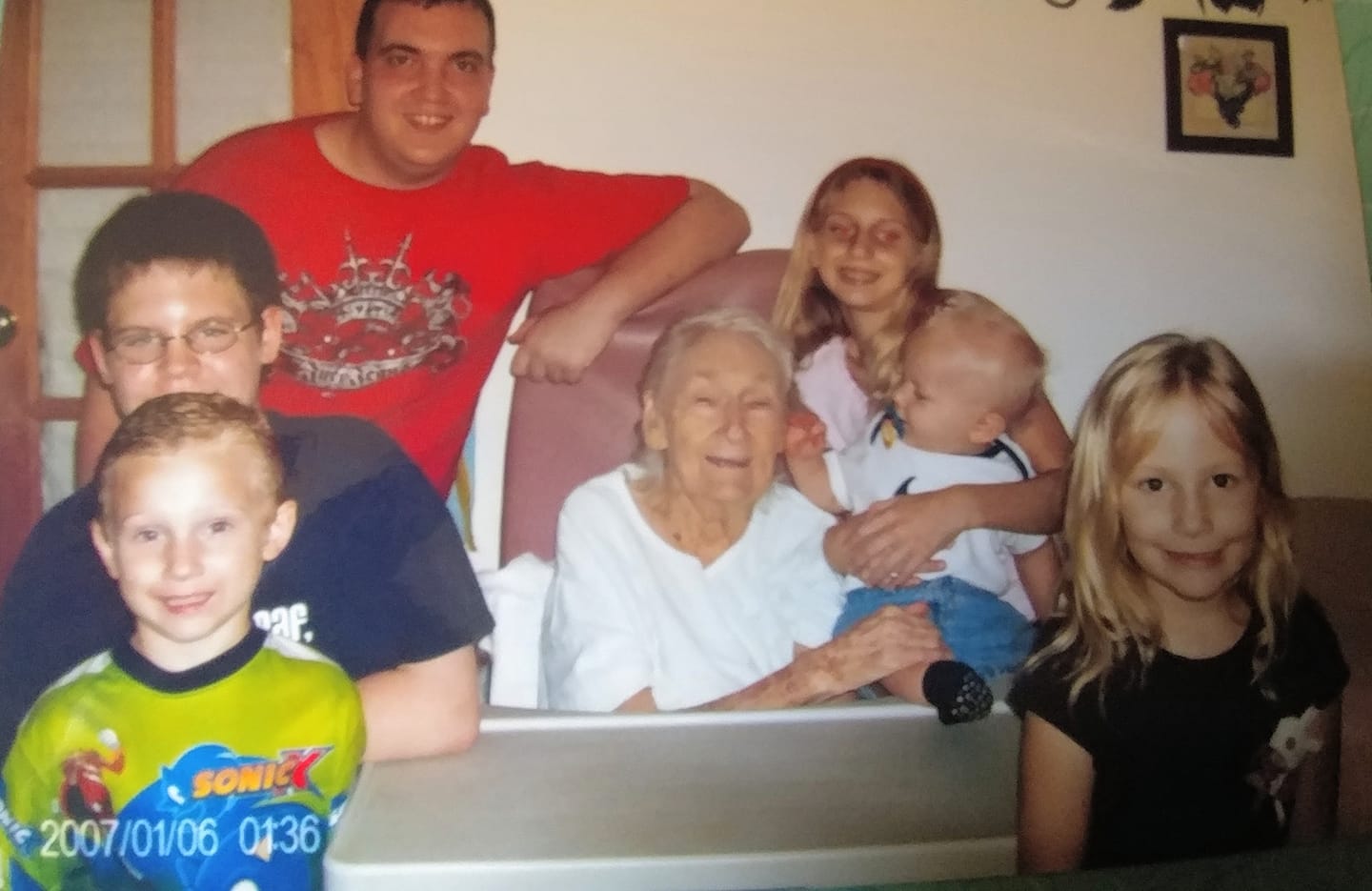
Looks like the tuberculosis hospitals in Oteen NC
Training on the job! A repost because I haven't prepared anything new yet. But soon...
Environmental craziness! Madison Avenue (what I call all retail energies especially advertising)
What on earth are they thinking will sell things these days?
Today's quote:
I think there is only one quality worse than hardness of heart, and that is softness of head. -Theodore Roosevelt, 26th US President (27 Oct 1858-1919)
From National Public Radio
| |||||
|
All blogger friends...anyone have any help on this issue which Bea posted about yesterday??
I haven't yet received an email like some other bloggers. But then I haven't been looking at the email addresses of some of my earliest blogs. So after I do that, I'll continue reading the Blogger Terms of Service changes/ updates...which I never knew were happening...why? And when did the strikethrough font choice go away?
I didn't want to look further last night...after reading that blog post and all the various communications. It seemed well done, but left me with...
1. if I don't get an email, will everything be ok?
2. if I do...you will hear suicidal ninja noises from an 80-3/4 year old in the mountains of Western North Carolina.
I have made at least 10 blogs. I didn't keep some of them up over the years.
I don't have any idea if Google Album Archive existed...but found if I went to the choice "Photos" under all the Google apps...there were photos from several different blogs that I used to publish. I didn't put them there. But they were in Albums by date! News to me...
But this is such a nightmare. I'm going to go meditate now. Ommmmmmmm......
To help me change the subject:
While we can’t control what’s happening around us, we can cultivate the capacity to be with what is with more ease, joy, and freedom. |
SEBENE SELASSIE |
I'm working on it...ease,
Joy
Freedom.
First looking at my Dad, George Rogers.
My father was born in 1914 in Galveston, Texas. He died on January 5, 1985, in Houston, Texas. In his lifetime he lived in Fort Worth, San Antonio, Dallas, and other towns in Texas. He spent a lot of his life in St, Louis, MO, and for a while in Boston and Framingham, MA, then returned to Houston with retirement.
He married my mother in an honorably committed relationship in which they called each other "Honey" on the good days. At the other times they didn't talk at all. They seemed to have had romance according to his photo album of their courtship days. But I had never experienced this, and I never even saw that album while they were both living.
![]() |
| They got their marriage license on Friday the 13, which they had not realized until someone else mentioned it. |
He had met my mother in San Antonio, after he lived as a boy in Fort Worth for a while. His father (of the same name) was a bookkeeper, and my father became one as well, then an accountant, about which I really don't know much difference.
He worked for an aircraft factory in Dallas, during WW II, and I was born at the beginning of the war.
Then after my sister was born, right at the end of the war, we moved to Houston. We lived there less than 4 years, traveling to visit relatives in Wisconsin on a summer trip which included the Smoky Mountain Park, as well as Principia, the Christian Science school in St. Louis, MO.
George Elmore Rogers, Jr. as a child. Undated.
![]() |
| May 26, 1917, 2 years 6 mos. George E. Rogers, Jr. |
He had three brothers who grew to manhood. Chauncey and Alexander were older than he was, and James was quite a bit younger.
![]() |
| I think their mother got them out of order, so my guess is that Chauncey is on the left, then George, youngest was James, and the oldest was Alexander. |
My mom and dad decided to move to St. Louis. I never heard their reasoning (after interviews at The Principia school boosted their intentions) but without any job prospects, our furniture was packed up, and we arrived in July or August. We stayed in a small upstairs apartment for a few days, then a farm house in St. Charles, Mo, then finally an apartment not far from the school. My mother started doing secretarial work at Principia. My father looked for a job, and it took a long time I think. He worked for a while for a big department store, and after a few years got a job with Principia also. Both my parents continued working there the entire time my sister and I attended the school, 16 years I think. They were dedicated to the values of Christian Science.
I left the college in my junior year, and left Christian Science. My sister, 4 years behind me in school, also left the school and the religion at that point in her education. We didn't see much of each other, so I think her choice was her own. Once we were out of school, my parents left St. Louis and moved to Boston, to work for the Christian Science Mother Church administration. They were also living closer to me and my new family in Hartfort, CT. My sister lived with them and went to BU for a while.
My parents were always a unit in my life, but I felt much closer to my father than my mother. I think this was partly due to my mother always seeming to have a preference for my sister. She was younger, and of course needed more care initially. But the "baby-ing" from my mother never really stopped. Perhaps this was due to her having seizures, or maybe she had other emotional needs I didn't know about.
My dad did everything that a father and husband and bread-winner was supposed to do. He was "always a gentleman." But considering he'd been raised in the religion, I don't remember him going to church on Sun, and never to the Wednesday night testimonial service.
And he had a flirtatious side to him. I saw it with other women once I was a teen. I never saw him behave inappropriately however. He always treated women with respect, but this was where I saw the same sense of humor that his father had had.
I remember going through my adolescence with the turmoils of hormones and how I reacted to boys and tried to find out who I was...without any support from either of my parents. In the 50's that was just how it was done.
After my divorce, my father would somehow slip me a $20 bill or more whenever I visited my parents. He would always say, don't tell your mother. She handled all the finances, so I knew this was coming from his "allowance" and he'd put it aside somehow.
I miss my father, and wish he could have loved my sons and shared in their growth to manhood. None of his great-grandchildren ever got to see him.
A repost from my father's birthday, which I wrote about in 2013.
I seem to have more posts about feeling bad, having cataracts removed, and not being able to focus with my old glasses...
But wait.
Yesterday it took all of 15 minutes to drive to the Optometrist's office to pick up my new glasses with lenses that work for my new eyes.
Yay. I did tell the woman who fits them that I was sick, but had no covid or flu since I'd been tested. She was glad to help me from a distance. She only had to move the nose pieces so the glasses would sit higher on my nose.
And then I took off. Wearing them under my big old clamshell sunglasses to drive. Coming through Wendy's drive-through because it was only 11:45 and no line...picking up a Apple Pecan salad, which included some chicken breast as well.
I took it home and just stuck it in the refrigerator...later in the day I ate about half of it for dinner. So nice that someone else prepared it for me.
I've enjoyed a lot of comfort food in the last few days. I just decided that's what I needed. Chips and salsa with Diet Dr. Pepper...then Tapioca Pudding.
Life is pretty good, I've got to say. Though I'm still working on this cold or whatever...and hope to have energy to do more tomorrow. We'll see, grasshopper.
One of my beautiful granddaughters...taken a few winters ago. But those are the same frames for my new glasses
Today's quote:
"The doctor must have put my pacemaker in wrong. Every time my husband kisses me, the garage door goes up." Minnie Pearl born Sarah Ophelia Colley (1912) She majored in theater, taught dance lessons, and joined a theatrical troupe which went all over the south (USA). While on tour she met a woman from the Alabama mountains whose manner of talking amused her. She imitated the mannerisms and mode of speech of the Alabama mountain woman in an act where she called herself "Cousin Minnie Pearl", which first appeared in 1939. Nashville radio executives saw the act and were impressed and in 1940 offered her the chance to perform at the Grand Ole Opry. It was a huge hit, and she'd continue with the Opry for more than 50 years. "How-Dee!"
Yesterday I finally gave in, took my temperature when I'd just risen, and it was 100 F. That's a bit high for me, so when the Doc's office opened I called and said cough, runny nose, fever...and I had taken 2 home Covid tests which were negative. With my chronic lung condition, I'd had all kinds of interesting sounds during the night, and I was hoping that my lungs wouldn't clear up the minute I got out to the Doc. He seldom has heard some of the noises they make once I come into his air conditioned exam room.
My Doc has a routine set up so sick covid-possible patients just stay in their car, and a nurse comes out and does a swab for both flu and covid test, and finds out what the matter is.
My nurse was a bit amazed when I had 106 temp. Me too. She asked did I have the heater on in the car. I said no, the AC was on. She took it again and came up with 104. Then I realized I'd sat in a car that had been in the sun by then (12:10) and had only driven it 2 blocks to the Doc's office. So it's quite possible I was having my body temp raised by sitting on a warm seat. But those rosy cheeks are a sure sign that I'm sick.
By the time my Dr. came out to listen to my lungs, he said they sounded a bit cruddy, or something more medical sounding. I got an antibiotic and drove around a bit till the prescription was ready to be picked up at the CVS drive-through.
I then went home and slept the afternoon away, after taking some Tylenol. I woke up later on, had some Tapioca Pudding for lunch, watched some TV, had left-overs for dinner, and then felt ready for early bedtime.
I'm so glad not to be fighting this bug without the drugs. I just hope the antibiotics keep working for me, as I've heard eventually they may not. We shall see if I live that long. Hope not, actually!
Today's quote:
When you let go of trying to get more of what you don’t really need, it frees up oceans of energy to make a difference with what you have. |
LYNNE TWIST |
I usually start my blogs with photos. But somehow I haven't been taking many lately. So I start today's post with a collection of all the photos that are first on each line in my personal file...the ones I saved to the computer when it decided to stop letting me see my iCloud photos.
First, I'm about 3 years old.
Today's quote:
From a new newsletter I'm enjoying
"Then a great peace came over me. . . and I seemed to hear the pines and the wind and the rocky shores say to me, “You . . . lover of the wild, are part of us. . .”
"The owl rides the meadow at his hunting hour. The fox clears out the pheasants and the partridges in the cornfield. Jupiter rests above Antares, and the fall moon hooks itself into the prairie sod. A dark wind flows down from Mandan as the Indians slowly move out of the summer campground to go back to the reservation. Aries, buck of the sky, leaps to the outer rim and mates with earth. Root and seed turn into flesh. We turn back to each other in the dark together, in the short days, in the dangerous cold, on the rim of a perpetual wilderness.
- Meridel LeSueur, from The Ancient People and the Newly Come
The root and seed phrase made me think of how us humans mate, with the male providing seed, while females provide eggs.
Thus life continues.
But think as a human who has eggs. That person is different than one who provides seeds. Think how he must think...spreading seeds in hopes new life will take. The one with eggs is thinking as one who wants a safe place to grow the life inside...definitely a place of one life to grow, rather than many.
I think there's more to this thought. And probably someone already came up with it. Seeds or Eggs. A way of thinking/feeling for men or women.
Sixteen young people who say the state isn’t doing enough to address climate change will get their day in court Monday. The lawsuit argues that lack of action violates plaintiffs’ rights under the state Constitution. This is the first youth climate lawsuit to ever make it all the way to trial in the U.S.
Badge Busse is a 15-year-old high school student who lives in Kalispell. He and his older brother have grown up hunting and fishing in the mountains surrounding their home.
“It's hard to watch the things that I love, like, get depleted slowly, like fishing with my dad,” Busse said. “It's like, my main way to hang out with him and my brother.”
Increasingly hot temperatures have eroded fishing opportunities statewide as angling closures during the hottest part of the day have become more common. The state Constitution, written in 1972, explicitly says citizens have the right to “a clean and healthful environment.”
That’s one reason this case has made it all the way to trial. Young people nationwide have filed dozens of lawsuits about climate change since 2015, but none have actually been heard in court until now.
The Busse brothers and their 14 co-plaintiffs say Montana’s leaders need to establish limits on carbon emissions.
Controls on carbon emission are not popular among the politically powerful here.
For the rest of this article go to NPR Montana News
Missoula High School Students Strike for Climate Change, 2019
Some interesting quotes of quotes...some of which I've included here.
USA Today, "... which is owned by Citizen Times' parent company Gannett, spoke with Jesse Keenan, economist and associate professor of sustainable real estate at Tulane University, who explored a number of factors with a team of researchers to formulate the list of 12 cities.
"... Asheville was recently named third on a list of the top 12 U.S. cities most likely to receive an influx of residents due to climate migration by an expert in sustainable real estate in conversation with USA TODAY.
The ever-growing impacts from climate change, including warmer temperatures, rising sea levels rise, more powerful and destructive storms will have more people fleeing coastal areas for places more able with withstand climate change, such as Western North Carolina.
Willingness to sign a 30-year mortgage can often hinge on how well the property can be expected to withstand the test of time — a test that has become more and more difficult to pass due to the effects of climate change, according to USA TODAY."
Source: Asheville Citizen Times
Original article in USA Today says:
"...Economists, flood experts and others often consider which cities might be safest from climate change impacts in the long-term, considering factors such as flood risk, sustainability and preparation to make communities more resilient.
But safety is in the eye of beholder.
The truth is every place has its risks, said Steve Bowen, chief science officer and meteorologist with Gallagher Re, a global reinsurance broker.
"...Across the country, people are struggling with rapid shifts between drought and extreme rain, warming temperatures and severe storms that produce hail, rain and tornadoes, Bowen said.
"...It appears people already are moving away from the coast in states like North Carolina and Louisiana, and that pace is expected to increase, said Jesse Keenan, an economist and associate professor of sustainable real estate at Tulane University who studies urban and infrastructure planning.
"...While conducting research, he [Keenan] and his research team have developed a list of cities that could be best bets. The communities stand out because of some combination of their geographies, economies and what they've done to get ready for the changes that lie ahead, he said.
These are the cities tops on Keenan's list:
"... Orlando also surfaced on a list published by Architectural Digest, considering elevation, population, extreme weather, risk and readiness scores, clean energy and air quality. Only one city on a coast made the list: Seattle. Others were:
More from Kate Raworth, the originator of Doughnut Economics theory.
The Planet's Economist: Has Kate Raworth found a model for sustainable living?
This rather long article looks at lots of things important to consider with our ecological approach to life on earth. It begins...
Consider the electric car. Sleek and nearly silent, it is a good example of how far the world has progressed in fighting the climate crisis. Its carbon footprint is around three times smaller than its petrol equivalent, and unlike a regular car, it emits none of the greenhouse gases that warm the planet or noxious fumes that pollute the air. That’s the good news. Then consider that the battery of an electric car uses 8kg of lithium, likely extracted from briny pools on South America’s salt flats, a process that has been blamed for shrinking pasturelands and causing desertification.
The 14kg of cobalt that prevent the car’s battery from overheating have probably come from the Democratic Republic of the Congo, where cobalt mines have contaminated water supplies and soil. As the demand for electric vehicles grows, the mining and refining of their components will intensify, further damaging natural ecosystems. By 2040, according to the International Energy Agency, the global demand for lithium will have increased more than fortyfold."
" ... After three years in Zanzibar, Raworth moved to New York to begin work as a researcher on the UN’s annual Human Development report, a project that ranked the world’s nations not by their GDP but by their citizens’ quality of life. While working on a report about consumption, Raworth read a book called How Much Is Enough? by Alan Durning, an American environmentalist. The book posed an urgent question: “Is it possible for all the world’s people to live comfortably without bringing on the decline of the planet’s natural health?” The only way to achieve this, Durning contended, was by buying less stuff – fewer fridge-freezers, tumble dryers, hair lotions and television sets. But few would be willing to accept the reduction in living standards that this would entail. “I remember reading about the data – our use of plastics, our use of materials – and I was like, this is what I’ve been missing,” Raworth told me."
"... “Doughnut Economics is all about action. We’re not sitting having academic debates back and forth about the meaning of words,” Raworth said ... “It’s time to be propositional, and sometimes the best form of protest is to propose something new.” To her supporters, the fact that no national government has adopted the doughnut as a substantive policy agenda is not an indictment of Raworth’s ideas, but of our governing classes. Despite plentiful evidence that the pursuit of growth has accelerated the climate crisis, contributed to rising inequality and failed to secure decent living standards even for many people in rich countries, politicians of all varieties still treat it as a panacea.
WHY THIS NEW MODEL ACTUALLY COULD WORK!
"... Raworth gently suggested that new, less doom-laden words and images [are] needed to describe the future. Because there are so few models for a low-growth economy that do not entail returning to an era before industrialisation, it has been easy for critics to portray any attempt to shrink our ecological footprint as an assault on social progress.... “There is a phrase I really like, which is ‘public luxury and private sufficiency’,” she told [Antoine Back, Amsterdam's deputy mayor,] pointing to Amsterdam’s generous bike lanes and tram system as examples of the luxuries that could be part of the solution to the climate crisis.
Antoine Back ".... told me the absence of solutions in Raworth’s work was one of its strengths. “I don’t use the word ‘solution,’” he told me. “It suggests that there is a magic bullet; that technology will come along and save us.” He feared that our tendency to search for irrefutable answers where there are none produces inertia, leading people to believe that it was always someone else’s responsibility to solve the climate crisis.
"...The week after we met in Amsterdam, Raworth travelled to Birmingham [UK] to give a talk at a community centre about putting the doughnut into practice. ... The event in Birmingham was hosted by Civic Square, a social enterprise that works with low-income local communities and hosts coffee mornings and community festivals organised by people with enticing job titles such as Doughnut Storyteller and Dream Matter Designer. “You can’t just keep shouting from the parapets, or relying on governments to legislate,” Imandeep Kaur, the founder of Civic Square, told me. “You have to put people at the forefront of the story, so they can actually take part in it.” In the future the enterprise intends to repurpose empty high-street spaces for the use of local communities, and to build a new public square. For now, they make do with a floating barge where visitors can read copies of Doughnut Economics over free coffee and cake; on the banks of the canal, they host regular events and a gardening club. "