Update about blog

The canyon behind my son’s house in Cortez CO.

Monday, July 14, 2014

TheWitty pioneers in Alabama

James Witty, a Quaker from North Carolina, moved to Alabama.

In the 1830 census for Limestone Alabama, he is listed with this household.

Name:James Willy (Witty)
Home in 1830 (City, County, State):Limestone, Alabama
Free White Persons - Males - 10 thru 14:1
Free White Persons - Males - 15 thru 19:1
Free White Persons - Males - 20 thru 29:1
Free White Persons - Males - 30 thru 39:1
Free White Persons - Males - 60 thru 69:1
Free White Persons - Females - Under 5:1
Free White Persons - Females - 15 thru 19:1
Free White Persons - Females - 20 thru 29:2
Free White Persons - Females - 50 thru 59:1
Free White Persons - Under 20:4
Free White Persons - 20 thru 49:4
Total Free White Persons:10
Total - All Persons (Free White, Slaves, Free Colored):10

I have looked at the Quaker Meeting Records which are intact from monthly Men's Meeting called The New Garden Monthly meeting of Guilford, NC.  James Witty is noted as a birth (date unclear by the page I've saved).  He also is noted to leave the meeting with his family to move to a meeting called Miami Meeting.  There are two notes to this effect, the first sort of a notice that it's happening, and sending a couple of the members to see if it's true in May, 1806.  The second is their report saying yes, it's true in June, 1806.

Introduction comments for Guildford, NC monthly meeting of Quakers
I found a very interesting survey map with James Witty owning land in N. Alabama.  I don't understand it all. 

His name is written across 4 squares that have a creek running through the middle, in the upper part of the map, centrally located.  And then one more square has J. Witty written in it.  I think it is from 1830 also.  The notes regarding it say: "Earliest Township and Range Public Land Survey State: Alabama Principal Meridian: Huntsville Meridian (Northern Part of Alabama)"

Ancestry says his wife is named Elizabeth Wells.  There's a Lucrettia Witty mentioned in a will for James Wells, in Surry County, NC 25 Jan 1810.  Nothing to indicate she's the same person.  Just a couple of the same surnames.

The first 2 of the 5 Witty children are listed as having been born in Tennessee according to Ancestry, and the later ones born in Limestone, AL, starting with my ancestor Carrol Witty.

I have no idea how they were also living in Tennessee.  More to research...


Saturday, July 12, 2014

Texas Pioneers

Carrol Witty  my great grandmother's grandfather.  (Eugenia Almeta Witty Booth Miller is my mom's mother's mom.

Carrol Witty was born: Nov. 6, 1818,
Death Sep. 19, 1898 Burial:
Old Woodbury Cemetery Woodbury Hill County Texas, USA

Spouse: Susan E Hoke Witty (1817 - 1895)

This list of children (below) from Texas Find a Grave doesn't include Eugenia.  She was born in 1852.   But I am going to use the information on these sisters to my family tree, because most of them only have estimated dates of birth based on census data.  This is a real find, though of course only depends upon the iffy source of Find A Grave which left out my great grandmother. 

Children:  Martha E Witty Barnes (1846 - 1914)*
 Mary Witty Hughes (1848 - 1876)*
Susan E Witty Moore (1856 - 1902)*
Laura Dove Witty Patty (1854 - 1935)*

I now have checked the source from 1860, the Census of Hill County, Texas, where Carrol Witty was a wagon maker.  He was one of the original founders of the community of Woodbury, Texas.
WOODBURY, TEXAS. Woodbury is on Farm Road 309 twelve miles northwest of Hillsboro in north central Hill County. Anglo-American settlers began moving into the area about 1850, and the community was established in 1857, when Carrol Witty, William R. Nunn, and Rev. Thomas Newton McKee purchased property and offered it for sale. After the Civil War settlers began moving into the area. The first business, a dry goods store, opened in 1869. A general merchandise store opened the following year. A post office opened in Woodbury in 1871. In 1892 the town had a population of 200, two general stores, a drugstore, two blacksmith shops, and a steam-powered cotton gin and gristmill. By 1900 the school registered 114 students and employed three teachers. The town was bypassed by the rail lines, and by 1936 only 148 people and two business were in Woodbury. In 1946 it had forty people and one business. During the 1950s and 1960s the population was twenty. From the 1960s through 2000 the community reported a population of forty.
BIBLIOGRAPHY: Hill County Historical Commission, A History of Hill County, Texas, 1853–1980 (Waco: Texian, 1980). Memorial and Biographical History of Dallas County (Chicago: Lewis, 1892; rpt., Dallas: Walsworth, 1976).
 I also learned that his children as of 1860 were many more than those who apparently have been noted by the Find A Grave people.


Carrol and Susan at 43, had 9 children living with them.  The oldest sons, John (16) and James (15) are already working as stockmen (I think, it's not really clear stock raisers?).  Then come daughters, Martha, 13, Mary, 12, and Fanny,10; then Eugenia, 9, William, 6, and Laura, 6, (twins?) and the smallest is Susan at 4.  Of course there could have been some children who were being fostered, as always happens in old records, so that might account for the extras that haven't appeard elsewhere in Ancestry.

Now I've got to find out more about Carrol's parents.  I just discovered there is more information available and I'm so excited to chase down details.

I know, it's just moving information from one place to another.  Going to see where the grave is, maybe there's a photo of the headstone that I can download onto my computer...and this is what excites me these days.  Mmm, don't you dare say what you're thinking!

Thursday, July 10, 2014

More about ships

Why didn't I learn about ships in school?  They were certainly important as trade goes, all imports were shipped from other places here most of my life.

So I'm looking into the ships my maritime ancestors might have captained.

An early ancestor was involved in 18th Century ship building and sailing also in Essex County, MA...I wrote a bit about the Pulsifer family here.

But for the Swasey sailors, especially Captain Alexander G. Swasey...back to the 19th century we go...


Clippers

Stung by their inability to counter the naval blockade by the British during the war of 1812, the Americans would concentrate on the development of fast sailing ships; the result was the clipper, often capable of reaching 20 knots, in contrast to the 5-6 knots attained by other ships of the day. 
Clippers would be used for transportation of passengers and valuable cargo like mail, tea or spices.
In particular, clippers would compete to bring the season's first tea to London or to New York. The winner would get a higher price for his cargo as well as the glory of winning. The most memorable race took place in 1866, when starting from Fuzhou, after 100 days at sea, Taeping and Ariel raced neck and neck up the Thames and arrived within 20 minutes of each other.
The opening of the Suez canal in 1869, marked the end of the Clipper era. The tea and mail trade was taken over by steamships and most of the clippers transferred to the Australian route, carrying general cargo and passengers to either Sydney or Melbourne, and returning with wool.   SOURCE: http://www.iro.umontreal.ca/~vaucher/History/Ships_19thC/

This information doesn't speak to where the ships were built, or who the captains might have been, but I would imagine these are larger ships than the schooners I spoke of yesterday...they certainly look bigger.


The Flying Cloud, US 1851


Cutty Sark 1859


Age of Steam

Around 1830, steam engines appear on ships as adjuncts to sails. At first the engine is connected to paddle wheels on the side; but within 15 years, screw propellers will be found to be superior both in power and economy. In parallel, iron will take over from wood for the hulls and the spars.
Sailing vessels will continue to be used into the 20th century: wind being more economical than coal for bulk cargo. Lacking a global network of coaling stations, US warships would rely on sail until 1890.
But for rapid reliable delivery of mail and passengers, steamers like the Great Western would take over on the Atlantic run starting in 1840.

Great Western (1837)
Isambard Brunel's first ship design
  • Steam and sail with oak hull
  • 3000 tons
  • 250 ft.
  • 11 kn
  • Liverpool-NY in 12 days

© www.cotswolds.info


Side-wheel Steamers

Propeller driven Ships

Launched in 1843, the SS Great Britain is the first ocean-going ship to have an iron hull and a screw propeller and for a time, it was the largest vessel afloat. She originally carried 120 first-class passengers, 132 second-class passengers and 130 officers.


Image from the Merchant Navy Assoc. site

Great Britain (1843)
  • Steam and sail (6 masts)
  • 3500 tons
  • 98m x 15m
  • 12.5 kn
  • First propeller ship to
    cross Atlantic
Refitted in 1851 with 3 masts and a shorter funnel to carry passengers to Australia

Warships

During the 19th c, warships will move from sail to coal-fired steam propulsion which provides speed, manoeuvrability and direct routes independent of prevailing winds. Unfortunately, a steam navy requires a network of secure coaling stations. England with its global empire could rely on stations around the world: Gibraltar, Aden, Ceylon, Singapore, Hong Kong, Australia, St-Helena, etc. The United States, lacking such an empire, largely stuck with sailing ships in the decades following the Civil War; and the few ships with steam engines, like Admiral Perry's Mississippi used them only as auxiliary power.
Coastal vessels close to refueling bases could use steam and many such vessels would be used during the US Civil war. The most notable example being the Confederate Ramship Virginia which engaged five major Union (sail) warships blockading Norfolk Harbour, sinking the US Cumberland and US Congress and running others aground.


Passenger Travel

The 19th century is marked by massive emigration from Europe to the Americas and to Australia. Initially, immigrants are carried on sailing ships but, depending on the weather, the trip to America can take over 3 months at sea. Steamships with the advantages of speed, regularity and comfort take over after 1850. The following shows typical travel times accross the Atlantic.


Steamship records
accross the Atlantic
Year Duration Speed
1838
First steamship crossing
18 days 8 knots
1850 10 days 12 knots
1900 5 days 22 knots
1950 3 days 35 knots


“The Embarkation, Waterloo Docks, Liverpool”

In the mid-1800s, most British immigrants to the United States departed from Liverpool, England. Many Scandinavians also sailed to America through the British port. Other European emigrants sailed from Le Havre, France; Bremen and Hamburg, Germany; and Antwerp, in Belgium.


1850 arrival in America

Inside a Packet Ship, 1854

This cutaway reveals how travelers, immigrants, and cargo sailed together. Travelers with enough money purchased “cabin passage” and slept in private or semiprivate rooms. The vast majority of passengers, usually immigrants, bought bunks in steerage, also called the ’tween deck for its position between the cabins and the hold. Source:http://amhistory.si.edu/onthewater/exhibition/2_3.html


In Steerage

Steerage passengers slept, ate, and socialized in the same spaces. They brought their own bedding. Although food was provided, passengers had to cook it themselves. On rough crossings, steerage passengers often had little time in the fresh air on the upper deck. If passengers didn’t fill steerage, the space often held cargo.

Complaints about overcrowding, poor food, abuse, and disease on immigrant ships led the United States and countries in Europe to enact new laws in the 1840s and 1850s.


Wednesday, July 9, 2014

Beauty is...

A family picture on someone's front steps.  The women have their pretty hair, their pretty frocks, their lipstick probably.

Does that make them beautiful?  I wonder...
I'm submitting this to Sepia Saturday this week.  There will probably be some other bloggers who are more successful at following the topic.


the men have sweaters, ties and my grandfather has a hat.  But the women don't have on hats.  And maybe one is holding a purse as if she's going somewhere.  But I don't think so.  I think they just came out in the cold just to take their picture to remember this event.  Maybe Christmas, maybe Thanksgiving.

The photo is cited in the album from the back row, from left to right is Chauncey, George (my father) unknown man (listed as Billy Seaman) and then in the hat, Poppy (George Rogers Sr.).
In the front on the left is my mother, then Zulie (Julie?) Winslow (Seaman) then "Aunt Jim" (a woman I don't know) then my grandmother Ada Rogers.

I am unable to find any interest in the prompt for Sepia Saturday this week...showing a woman getting her hair done and a manicure.  I haven't indulged in that kind of vanity much in my life.  Most of my hair exploits were done at home, and I've never had a manicure by someone else.  Not that I'm proud of that, just these are such frivolous ways for me to spend my time, energy or funds, that I just don't see the point.

There were some years when I used makeup daily on my face, changing with the current styles.  There were years I colored my hair, or curled it, and certainly would have it cut and styled occasionally in order to fit into a professional life.  But I became an artist in my 30's, and that was where my heart was...to make beauty that would be shared with other people.  So I, myself, wasn't the canvass that I chose to work upon.

Back to figuring out who is in the above picture.  My parents (before me obviously) and grandparents.  Chauncey is my father's brother.

The Zulie Winslow and Aunt Jim and Billie Seamans are related.  It looks as if Aunt Jim would be Zulie's daughter.  Why is she called Aunt Jim then?  And is she married to Billie Seamans?

My grandmother did have a sister, who was called Stella Winslow

Gummy in the middle
Here are at least 2 of the same women, with my grandmother being in the middle, and supposedly her sister on the right side of the photo.  That leaves the brunette on the left, who is beginning to look more and more like a daughter of Stella, or at least a generation younger than the floral clad sisters.

OK, I'm going to take a stab.  The Zulie in both of these pictures is Stella's daughter.  And the guy in the back is probably her brother Billie Winslow.  He was definitely in my father's generation.

Zulie Winslow did marry a man named Francis Seamans, and their son Billy was born in 1937.  He wouldn't have been a man standing in the back row of this photo...so whoever named his uncle his name messed up. It's unlikely that it's Zulie's husband, Francis Seamans, because he was born in 1897, and the man in the back looks young as my father at least (born in 1915).

So who is Aunt Jim, aka the unamed woman next to my grandmother?  She's of the adult children age, born around 1910-1918.

OK let's just look at the Winslow home in the 1940 census, since that's probably within 5 years of this photo.  My parents married in 1936 and that looks like the coat my mother wore to be married in.


Head of household is 51 y.o. Stella Winslow.
Next entry is her son, William Winslow, age 22.
Next comes Francis Seamans, 43 y.o. son-in-law.
Next comes Zulie Winslow Seamans, daughter of Stella, age 29.
And finally is William Seamans, age 7/12, the grandson.

I may not know who Aunt Jim is yet, but the relationship of Zulie and her husband is clarified.  He's close to her age, but certainly not the young man in the back row of the picture.  It's got to be her brother, William Swasey Winslow, who was born in 1917, and married in 1945.  His wife would be Jane Hughes, who might be the woman in the front row.

The most shocking thing for me in looking at this picture, is that Stella Winslow wasn't part of the group.  She wasn't ever someone I met, but she lived until 1960, the year my grandfather died, in the same city also.  All those years I went to parties and stayed over at my grandparent's house, I never met my grandmother's sister.  I would think she would have been more likely to be named Aunt Jim, but she wasn't in that group at all.

Mysteries of families abound!

SOLVED: My cousin answered my quest.  She remembers her father, my father's younger brother, calling Aunt Jim as Stella Winslow, my grandmother's sister.  So those photos that have some names underneath aren't always to be trusted!  And now I know I had a great Aunt Jim (really Stella Zulieka Winslow!)  Added 9:00 pm, July 13, 2014.

Tuesday, July 8, 2014

Captain of what ships?

Captain Alexander Swasey sailed at least from Charleston, South Carolina, to New Orleans, LA, and then later to Cuba.

What ships did he sail?
I've already mentioned his brief stint as a Blockade runner on the Ella Warley.

That ship had actually been commisioned the Isabel, built in 1848 in Baltimore.  It was owned by Charleston businessmen. It was constructed specifically to serve the United States postal service, as well as coastal passenger trade, between the eastern United States and the Spanish colony of Cuba.

Since Swasey was captain of it when it was turned over the the Confederacy in 1861, until its capture by Union forces in April, 1862, I will try to see if Captain Swasey had command of it from 1848, or when he indeed did take over its sailing.

Here's a painting of the Ella Warley.

The Ella Warley

Here's a manifest from 1843, when he captained the Schooner Caluo from Charleston to New Orleans from April 6-28.


I don't have a picture of the Caluo, but here's a 3 masted schooner, the Regina Maris.


Schooners were developed in North America from the early 18th century, and came into extensive use in New England. The most common type of schooners, with two masts, were popular in trades that required speed and windward ability, such as slaving, privateering, and blockade running.
Essex, Massachusetts was the most significant shipbuilding center for schooners. By the 1850s, over 50 vessels a year were being launched from 15 shipyards and Essex became recognized worldwide as North America’s center for fishing schooner construction. (SOURCE: Wikipedia)

This slave manifest for the same ship, June 6-29, 1843, is more disturbing for me to read.  These are women, the oldest being 50, and children from 4 years of age.  Incidentally the ship is now spelled Callao.

Captain Swasey was born on April 14, 1812 in Newburyport, Essex, Massachusetts.

If he became a sailor as a young man, or at least was involved in the shipping business (a family business probably) he would have been aware of all kinds of ships and boats.  By 1843, when he was 31, he was Captain of the Schooner Caluo (Callao).

When did he move south from Newburyport MA?  I don't know.  

In the census of 1840, he was living in St. Augustine FL, where his first daughter was born that year.  His next daughter was born the next year, also in FL.  Then the family didn't change size again until 1849 when another daughter was born in Florida. Then in 1853 their only son was born, Alexander John Swasey  in Charleston.  

So though Captain Swasey was working out of Charleston in 1843, his family life was in St. Augustine.  And that was before Florida became a state in 1845.  For some reason his family was back in Charleston by 1853.

AG Swasey Home at 22 Savage St.
Captain Swasey's home, 22 Savage St., Charleston, SC

I just discovered an Official records of the Union and Confederate Armies, 1861-1865, where there's an A.G. Swasey with some kind of classification "II, 4"  as well as Alexander Swazey with "II, 8" following his name.  I wonder what that means?  This is on  page 495 of the microfilm, and original document page number 935.  So to find the key to meanings I'll have to do more research.

AG Swasey Home at 1 Limehouse St.
Captain Swasey's home? This is 1 Limehouse St, his place of death.

I have copies of innumerable Prisoner of War documents from the Civil War with Captain A.G. Swasey listed...with amounts of money.  I don't understand them, so will wait till I have someone to walk me though the meanings.

NOTE:  The documents show he was interred in Fort Warren, MA, a Federal prison. First entry I have found is Nov 11, 1863.


Monday, July 7, 2014

Joseph Perkins Pulsifer

Happy birthday Joseph Pulsifer, July 8, 1805!

As mentioned in my blog back on Dec 26, 2013, I have an interesting quote of a story about Joseph P. Pulsifer, (1805-1861)  I remember hearing how my grandmother did go to Beaumont for a court case having to do with the city of Beaumont Texas, and her relationship to the Pulsifer brothers.  (Her great-grandmother Lucy Pulsifer Granger was sister to Joseph and Ebenezer Pulsifer, surveyors and founders of Beaumont, TX)  She was listed on the court documents as being a living descendent of them.

First Courthouse in Beaumont, TX, completed in 1854. Built by John A. Beaumont

PULSIFER, JOSEPH PERKINS (1805–1861). Joseph P. Pulsifer, early Texas apothecary and a founder of Beaumont, the son of Ebenezer and Elizabeth (Dwelbee) Pulsifer, was born in Newburyport, Massachusetts, on July 8, 1805. Little is known about Pulsifer's education, except that his letters show him to have been an extremely literate man. Probably through apprenticeship, he became an apothecary, and sometime after 1827 he opened a drugstore in partnership with his brother Eben in nearby Charlestown, now a suburb of Boston. There Pulsifer became a member of the Mechanics' Society and served as its secretary in 1831. Sometime during 1832 or 1833 he returned to Newburyport to work in the drug firm of Thomas Davis and Company. In the fall of 1833 Pulsifer moved to New Orleans in search of economic opportunity and found employment in the store of druggist and retail merchant Henry W. Millard . By 1835, however, the firm developed financial troubles. Pulsifer and Millard then entered into a partnership, J. P. Pulsifer and Company, with Texas merchant Thomas B. Huling . The men moved to Texas in July of that year. In a small settlement named Santa Anna, on the Neches River, they opened a store under Pulsifer's management. In the fall of 1835 the firm purchased fifty acres on the Neches River and laid out the boundaries of a new town, which they called Beaumont.
From Beaumont, Pulsifer took an active, if nonmilitary, part in the Texas Revolution . Citizens of the Neches River Settlement, as that area was called, appointed him chairman of the Committee of Correspondence, secretary of the Committee of Safety, and a member of a local committee to draft ideas for a constitution and bylaws for Texas. He also served as Beaumont's first postmaster and as a trustee of the first school. After the revolution Pulsifer, Huling, and Millard added fifty acres to the original Beaumont townsite. By entering into partnership with Nancy Tevis and Joseph Grigsby , each of whom donated an additional fifty acres, they increased the original area of the town to a total of 200 acres. Beaumont ultimately incorporated both Santa Anna and Tevis Bluff, an older settlement about a mile upriver from Santa Anna. Pulsifer, who never married, remained a citizen of Beaumont for the rest of his life. In addition to practicing his professions of storekeeper and apothecary, he served in various public offices: collector of revenue for the port of Sabine, county clerk, county commissioner, and clerk of the Jefferson County Board of Land Commissioners. Before the first Jefferson County Courthouse was built in 1854, the county commissioners periodically held court on the second floor of his combination home and store in Beaumont. He also served as an agent in Jefferson County for the Austin State Gazette . Pulsifer died in Beaumont in 1861. The one extant volume of his correspondence remains unpublished. It covers the period from 1833 to 1836 and describes his immigration to Texas and his ordeal during the Texas Revolution.
BIBLIOGRAPHY: Judith Walker Linsley and Ellen Walker Rienstra, Beaumont: A Chronicle of Promise (Woodland Hills, California: Windsor, 1982).
This exact publication is copied into Texas History Online HERE. 

It also gives me the details of where Grigsby Bluff and Tevis Bluff are...which were sites of letters from my grandmother's great grandfather, George Granger, and her grandmother, Mary Granger Phillips.  I've transcribed some of those letters
letters,
grigsby-bluff-letter-dec-9-1861
before-war-started-1856-texas
old-letters-transcribed

 More on Beaumont TX history will be coming soon.

Artist birthday


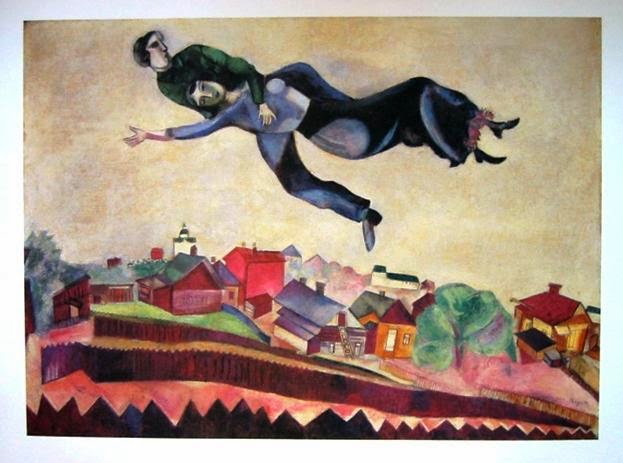
Happy Birthday to artist Marc Chagall, born in Vitebsk, Russia (1887). He was one of nine kids in a family of modest means; his father worked for a salt herring factory, and his mother ran a shop. He wanted to be an artist, and he moved to St. Petersburg, where he failed his first entrance exams but eventually was accepted to art school. It was in Paris, surrounded by other artists, that he really began to develop his style. Though he was homesick and could not speak French, he later said, "My art needed Paris like a tree needs water." Chagall is known for bright and complex colors, and his fantastical images from Russian-Jewish folklore and his childhood: ghosts, livestock, weddings, fiddlers, scenes of his village Vitebsk, a couple floating in the sky, and fish.

Sorry, forgot to give you the source:
Paintings from Wikipedia

Sunday, July 6, 2014

A Swasey name

I found this post on a face book page, strangely enough in the name of HRH Prince Rob Justice.
I have corrected simple spelling mistakes, but none in any names of people or places.  And I've avoided trying to straighten out the weird punctuation that was used.  I did add a bunch of paragraph breaks so it's not one long unbroken tract.  I wonder if this is as good as it sounds!

THE ORIGIN OF THE SWASEY FAMILY IN ENGLAND 1700--late 1800's , England 

One of my most interesting pieces of research has been on the origin of the very unusual name of Swezey or Swasey, to give just 2 of the various spellings.; I shall use the form Swasey as the general form, since it most nearly follows the pronunciation of the name of the John who came over 1629-30. I shall also designate the generations by numbers from the immigrant, i.e; call the first John, John 1, his son John 2, & John's son; Joseph#3; In the Swasey Genealogy by Benjamin F. Swasey there is an item stating that "de Suavesey"; is mentioned in the Dooms Day Book; also the Priory of Swavesey as being given to the Abbey of St. Sergius St. Boeschius. 

Starting with this, I first located the modern village of Swavesey about 10 miles from Cambridge in Cambridgeshire, and in the Victorian History of Cambridgeshire, I found my village with the story that it had been given by William the Conqueror to a Count Allen who had given the church to the Abbey of St. Sergius & St. Bacchus at Angers in France.; An exciting find was in an article on Tokens; in Vol. l of the publications of the Cambridgeshire Antiquarian Society when, in the 15th century, the Village was called Swasey.

 It seems that for over a hundred years in the fifteenth and part of the sixteenth centuries the village name was Swasey.& In fact, when I was there in 1959, the rector of the old church showed me the large communion cup which was engraved Swasey. Next, I began to search early English records for items on the village its inhabitants: I found a great variety of spellings, in 940 Swaefesheale, 1066 Swauesham, 1080 Swausey ; Swausheda, Swaueseia in 1155, Swaveshide in 1203, Swaveseye in 1265 etc, At this point, I realized that I needed to consult a philologist to explain all these different names of the Village. 

I was fortunate in being referred to a Mr. Mathews, an Englishman teaching a year at U.C.L.A.; He took my list in a few moments explained that the names all meant the same thing. Ham meant farm; hede, hidi, hith etc. all referred to a landing place, as in a Marsh of fen, which this area was at the time. All the endings were Anglo-Saxon ; the original form was Swaefes landing, meaning the place where the Swaefes or Swabians landed, Undoubtedly, the Anglo-Saxon form was normanized to Swaveseye, as it appears in the time of William the Conqueror. I have had considerable Correspondence with Mr. P.H. Reaney who is the authority on British names, he tells me that Swavesey is the only parish in England where our name could have originated.; 

 Having settled this, the next problem was to trace the name of the John Swasie, who came to New England 1629/30. I found no Swaseys in Cambrideshire as late as the 16th century.; There were a few references to the name in neighboring counties earlier, but none as late as 1629/30. A search of the records in practically all of the counties of England finally led to a real find in Bridport, Dorsetshire, St. Mary's Parish Registers mentioned the Swasey name with various spellings 24 times between 1605 1638; The Country Archivist at Dorchester furnished 7 more items from 1576 to 1744, Also, in a Parliamentary Return of 1786, there was listed as part of a charity granted earlier to the Netherby Parish (near Bridgeport), an Estate called Swayses.; By 1790, apparently there were no Swaseys left in Bridport, as none are recorded in the Land Tax list of that year.

 A check of London records produced eleven Swasey items from 1677 to 1839, all of these later than the date our John left England. The London telephone directory in 1959 listed 3 Swaseys. I called one of them; the others were a sister and a son.; He was interested, but had no information on the family, except that he believed that they came from Swavesey. Going through old directories, I found a William Sweasey, Stationer, in Postsmouth, Hampshire.  I wrote to him & received an answer from his grandson, saying his grandfather was not living, that they were very much interested in the line, and believed that Swavesey was the place where the family began. More of these Portsmouth Sweaseys later. 

My conclusion as to where John Swasi & his 2 sons, Joseph & John, lived is that it was Bridport. A Christopher Swasi was there in 1576, for 2 hundred years, there were Swaseys in Bridport. Some of them were Quakers, as was our immigrant ancestor. The Rev. John White of Holy Trinity Church in Dorchester was a leader in supporting the movement to the New World & was responsible for sending several ship loads of Puritans from Dorsetshire & neighboring counties. The King Family, whose, daughter Katherine married John 2, sailed from Weymouth, Dorsetshire. That the baptism records of Joseph & John do not appear in the St. Mary's Register might well be explained by the fact that this was a Quaker Family.; 

We still need to connect the Bridport Swaseys with Swavesey. This brings us to the question of when did the name become established as a surname.; For instance in early records John de Swaveseye would mean a man named John, ;who lived in Swaveseye. Mr. Reaney told me that many surnames became fixed in the 13th century, but until you found 2 or 3 generations with the name, you could not be sure you had a surname. In records concerning the Manor of Brokdyschall in Norfolk from 1474 to 1494, I found John Swansey (Swausey) & Richard Swausey, evidently a father & son. This Richard was living in Hertfordshire in 1489 & 1490. Hertfordshire is just north of London & County Norfolk adjoins Cambridgeshire on the northeast. So, by 1494, we have the surname established & on its way to London & to Dorsetshire, where we find Christopher in 1576. 

This leaves a gap of less than a hundred years between Richard in 1494 & Christopher in 1576. We may never find the connecting names, but we have established the place where the name originated & the place from which our immigrant ancestors came. Let us hope that more research will bridge this gap someday. 

Now going back to the Portsmouth Sweaseys. The family was a wholesale stationary business, now in the hands of Charles Sweasey, who is the 3rd generation. Daughter Madeline son James both work in the business. I spent a delightful weekend in their home last summer & loved them all, the mother Stella, and a dear old gentleman, the grandfather, Arthur Sweasey, nearly 90. Madeline is doing some careful work on on their ancestors & has carried the line back to an ancestor married in London in 1746. She will continue with this work, and has already tied in the London Sweaseys as well as a few other cousins. I am hoping she will some day be able to connect the London & Bridport Sweaseys. 

She went with me to see Mr. Reaney in Kent, where we talked over some of the name problems of the early Swaveseys, & she is competent to carry on this research too. I must tell you an interesting bit, Jim wrote me recently of a Warner, Swasey & Asquith firm in Hull, England, a subsidiary of our Cleveland firm, Warner & Swasey. Enough for the Swasey line. 

A Report on the Ancestry of the Swasey,& Swezey Wives:; The Swasey Genealogy gives us Katherine King, wife of John 2 and we have the list of her family from a ship record. I have succeeded in locating them in Somersetshire, a county adjoining Dorsetshire. We have the wife of Joseph 3, Mary Betts, with the names of her parents, Richard & Joanna. The Genealogy says they are from Hemel, Hempstead in Hertfordshire. Another record I have seen gives Richard as coming from Suffolk County. Here is another job for the genealogist. Then comes the wife of Stephen #4, Elizabeth Young. She was the daughter of Benjamin, granddaughter of the Rev. Christopher Young, minister of St. Edmunds in Southwold, Suffolk, England. John was the minister at St. Margarets in nearby Reyden. Both of these churches were of great antiquity & belonged to the same living. In 1956, I visited them both. I believe the family was originally from Suffolk, I noted on the family sheet that Joanna was a family name.

Christopher's grave is just outside the church wall at St. Edmunds & inside is a tablet that tells that John went to America. This was in 1637-1640, he founded the Church at Southhold on Long Island. The Southold church has always considered itself an offspring of the Southold church & there has been an interesting relationship between the 2 churches. There is a Younge family history by Selah Younge, who gives the family an interesting Welsh desscent, which he carries back to the time of William the Conqueror, I have not checked the sources, so cannot vouch for the line. Then comes Christopher Swezey#5 whose wife is not given in the Genealogy, however, I have found the marriage record of Christopher & Juleana Davis, but have not been able to locate her parents.

Now we come to Daniel Swezey #6, (ancestor of all of us here). His wife, Sarah Beal is given in the Genealogy as the daughter of a celebrated music teacher from the state of Connecticut. I have found her Beal line, Mathew #3, her father George 2 & George l. This George came ca. 1726, probably from Kent, England. In the state library at Hartford, Conn., I found the will of George 1, & many records that placed all his descendants. Then in Stiles History of Ancient Windsor, I found several church items, one in 1727 about the rule of singing taught by Mr. Beall, another where a church voted to hire Mr. Beal or Mr. Wilson to teach us to sing, an item in 1767, where George Beal & his son Mathew are teaching the congregation to sing, another item in 1771 to introduce singing by rule, from these items & others, it is apparent that Mathew, the father of our Sarah Beal, and his Father George both taught congregational singing in several Connecticut churches. I have not been able to find names of their wives, George l came with grown sons & probably George 2 was married in England. 

There is a 1742 record of a second marriage for George l. More research is needed to find Mathew's wife, the mother of our Sarah, also a search in Kent, England, where there are many Beals, may some day locate George 1 & his sons. My discovery of the ancestral lines of Susannah Staples, first wife of the Rev. Samuel 7 Swezey, fourth son of Daniel, was perhaps the most exciting breakthrough I ever had. I won't take your time to tell you of this except to say that I have been able to trace all her lines back to colonial times. At present I am working on the ancestry of Rachel Cook, wife of my grandfather Lewis Swezey, who went to Illinois in 1839. Her fathers name was John Cook & my problem there is to trace the right John Cook. When you are tracing ancestors you can be thankful for an unusual name like Swezey.

Minnie Swezey Elmendorf---July 1966

 posted on FB in 2012 at Hrh Prince Rob Justice page.


Saturday, July 5, 2014

Frederick Andrew Williams

Here's the person that I found most interesting.
Some people put parents on his tree in their ancestry DOT com listings.

I'm not certain who his mother was, and apparently his father had an interesting name, Shadrach Williams (1730-1810).  Many of the trees agree his mother was named Sarah, but where she came from could be New York or Wales.  Apparently some of the ancestry family tree creators are debating how Sarah in Wales was not only born there, married Shadrach Williams, and died in Wales.  I don't think they had a son born in Orangeburg County, South Carolina.  So I'm voting that the Shadrach Williams who was his father was someone closer to home.

But how could he have married a woman from New York when he was born in Richmond, VA in 1730.  Somehow we've got Sarah's birth and death dates (1749-1811).

Then I started checking the innumerable children, many of whom were listed twice, with a year different in birth or death, or no dates at all.  The first scarey birth listed was in 1750, a John Franklin Williams.  So when his mother was 1 year old, she gave birth in Orangeburg County SC.  Mmmm, not so much, I think.

I deleted three siblings born before Frederick, who was born when she was just 15 as it is.  Or perhaps this isn't the correct birth date for their mother.  I probably won't be able to ferret that out, because women just didn't get lots of paper referring to their lives in the colonies back then.

Well, the records are confusing, and I'm just curious enough to add the names Shadrach and Sarah Williams to Frederick's tree.

Frederick married Cassandra Elizabeth Tate (1765-1851) in 1785 in South Carolina.  Sounds believable.

They moved to Kentucky by the birth of son Richard in 1792, and were on the census of 1810 in Somerset, Pulaski County.

Frederick was in the militia from Kentucky in the War of 1812..though he was 48 at the time it began. His Company was the 14 REG'T (MITCHISSON'S) KENTUCKY MILITIA. Rank - Induction: PRIVATE Rank - Discharge: PRIVATE Roll Box: 227 Microfilm Publication: M602.

Frederick's second child, first son, was Richard  Frederick Williams.  The Frederick and Cassandra Williams family had many children, but I kind of doubt the last was born when she was 60.  Honestly!  I just want to kick something.  There's a real person, who was sweetly named Cassandra "Suzie" Williams, born in 1825.  I'm pretty sure she wasn't the daughter of Cassandra born in 1865.  So she belongs to another family named Williams, and perhaps was named after our Cassandra.

So that's been the fun and games that I've played this evening.

The real stories got confused as people were pouring over the mountains into Kentucky and Tennessee.  When people got things written in details, like the census records that say children's names and birthdates, it's a lot easier to get things straight.


Friday, July 4, 2014

Dead Ends on the tree...not

These are branches that don't go back any further.  They obviously are not dead ends literally.

I just don't know parents of these people, so this is where this line stops, for now.

My mother's family goes back a few generations for each of the member, except her grandfather Charles Herman Mueller (1868-1946) from Germany.  I've never found his parents.

My mother's father's father's parents are another stopping place.  Samuel James Webb  b. 28 January 1827 in Vienna, Dorchester, Maryland, d. 15 AUG 1877 in Clinton, Dewitt, Texas, and Ellen Ann Delamater Webb, b. 25 Jan 1842 in New York, d. 15 Jul 1876 in Clinton, Dewitt, Texas.

 William T Williams marker
And my mother's father's mother's mother, Dorcas White Williams has no parents listed so far.  Her life was from 13 Dec 1825 in Kentucky, to 21 NOV 1900 in Weesatche, Goliad, Texas.  Doras' husband William T. Williams has several generations on both sides going back to Frederick Williams, b. 13 Feb 1764 in Orangeburg, Orangeburg, South Carolina, d. 18 Nov 1831 in McMinn, Tennessee.

And now I must diverge off this path I set for myself.  Of the hundred or so ancestors who have shorter branches, this gentleman has a lot of data which I haven't downloaded yet to my tree.  War of 1812 and so on.  So I'll leave you here as I go delving into a life that has lots of records attached to it.

If the people who lived without a lot of paper only knew.  I honor them that they lived on this earth, loved with passions unknown to me, and left me some of their DNA to carry forward to other generations in the future. 


Thursday, July 3, 2014

Let's go Dutch

I've been doing lots of fun things in genealogy lately.  Yesterday I proved my great grandmother's maiden name started with a "Z" rather than a "T" which opened up a whole new world.  Now I want to figure out where people named Zylstra might have originated.

She married a Swasey, lived in Charleston, SC, and her mother came from England.  Perhaps her mother had originated somewhere else and gave that as her origin to the census taker.  There aren't any birth records for Mrs. Charlotta Zylstra nor any note (yet) of who her husband was.

Holland seems to be the first choice on Ancestry, with a few people immigrating to the US from Germany of that name.


And the meaning for Zylstra that Ancestry DOT com gives is...Frisian: topographic name for someone who lived by a sluice, from an agent noun based on zijl ‘sluice’, ‘pump’. Compare Van Zyl.

Another source speaks about Dutch surnames...
From about 1812 through 1826, the Dutch were first required to choose surnames. This event is called the "naamsaanneming". It was ordered by Napoleon who occupied the country at that time and was trying to take a census. These surnames would later come in handy for legal purposes such as inheritance. Prior to the introduction of surnames, the Dutch used a system of patronymics - the surname of the child reflected the first name of the father - similar to the system used in the Scandinavian countries. Jan's son Willem would be known as Willem Jans/Jansz/Janszoon or something similar. Jan's daughter Grietje would use the surname Jans or Jansdr.

Unfortunately some Dutch citizens did not take this name choosing seriously, thinking it was just a passing fancy, and selected names such as De Keyser (The Emperor), Lanckpoop (long poop) and Zondervan (without a surname). To this day these names are still in use.
Other Dutch naming customs took a physical attribute of the person or surroundings, a trade, a title or even an animal as the surname. Examples are de Jong (the young), van Dyke (of or living near a dyke), Meijer/Meyer, meaning bailiff or steward and Vos, meaning fox. Towns and physical features were also source of names. The words "van der", "aan het" and "de" that are part of many Dutch names are called tussenvoegsels. Although they are officially part of the name they are not included in searches. If the surname is van den Berg, then Berg is the important part of the surname that should be entered in the search criteria on Dutch websites. In the United States, the same name might be entered as one, two or three separate words. It should also be noted that the letter combination "ij" is changed to "y" in many Dutch names. One other useful tidbit about the Dutch is that the women retain their maiden names on most records. This makes it much easier to find their families as well.
Except for the colonial period of exploration and trade that lasted from the early 1600s through 1664 when New Netherland (New York) was sold to England, Dutch families did not appear to move around very much until the mid -1800s. That first early migration during the 1600s resulted in a large Dutch population living on the east coast of the United States, especially along the Hudson River, New York City, northern New Jersey and Lewes, Delaware. Dutch immigration to the United States prior to 1845 averaged about 200 people per year. After 1845 that number increased rapidly due to a potato famine, high unemployment and division in the Reformed Church. The major destinations for the Dutch were the New York/New Jersey area; Green Bay, Wisconsin; Holland, Michigan; and Pella, Iowa.  A large number of these immigrants came from the rural provinces and were farmers.  (Source: http://www.archives.com/genealogy/family-heritage-dutch.html)


And more information is here...
This surname of ZYLSTRA was a Dutch topographic name for someone who lived by a patch of stagnant water, i.e. a lake or canal. The name is also spelt ZIJLSTRA, VAN DER ZYL, VAN ZIJL and ZYLMAN. Habitation names were originally acquired by the original bearer of the name, who, having lived by, at or near a place, would then take that name as a form of identification for himself and his family. When people lived close to the soil as they did in the Middle Ages, they were acutely conscious of every local variation in landscape and countryside. Every field or plot of land was identified in normal conversation by a descriptive term. If a man lived on or near a hill or mountain, or by a river or stream, forests and trees, he might receive the word as a family name. Almost every town, city or village in early times, has served to name many families. The Dutch language is most closely related to Low German, and its surnames have been influenced both by German and French naming practices. The preposition 'van' is found especially with habitation names, and the 'de' mainly with nicknames. Compared to other countries, Dutch heraldry is notably simpler, some of the shields bearing only a single charge. Generally speaking one helmet, one shield and one crest has been used, quartering is uncommon and mottoes are rare.
Over the centuries, most people in Europe have accepted their surname as a fact of life, as irrevocable as an act of God. However much the individual may have liked or disliked the surname, they were stuck with it, and people rarely changed them by personal choice. A more common form of variation was in fact involuntary, when an official change was made, in other words, a clerical error. Among the humbler classes of European society, and especially among illiterate people, individuals were willing to accept the mistakes of officials, clerks and priests as officially bestowing a new version of their surname, just as they had meekly accepted the surname they had been born with. In North America, the linguistic problems confronting immigration officials at Ellis Island in the 19th century were legendary as a prolific source of Anglicization.   (Source: http://www.4crests.com/zylstra-coat-of-arms.html)

Welcome to my entry to Sepia Saturday this week. 


I know I don't have any shots of men with pipes, nor shaking hands, nor wearing funny hats, nor boys sitting on walls overlooking the whole shebang.

We have 3 children born of Charlotta Zylstra, in Charleston, SC.  She and 2 of her grown children had moved to St. Augustine, FL by 1850.  Actually her son, Peter was appointed the Postmaster there in 1840. 
1850 St. Augustine FL Census

Her daughter had married Captain Alexander Swasey, who also called Charleston his home.  He did have residency in St. Augustine, Florida territory, in the 1840 census however. 

For now I'm settling into knowing a part of my ancestry is probably Dutch, and still to be explored, if possible.  And Captain Swasey married the daughter of an immigrant who was listed when she was around 65 as being from England.  


Wednesday, July 2, 2014

The "Z" problem

Penmanship.  Do you remember how to write the "Z" character?
Not many apparently can read it on an 1850 census of St. Augustine FL.

So my grandmother's grandmother has been listed as a Tylstra.  And since the man actually doing the census taking was Geroge J. Zehnbauer, from Germany, and signed his name at the top of each sheet...it's clear his last name doesn't begin with a "T"...thus demonstrating his "Z" prowess.

He lists his occupation as Deputy, US Marshall, though he was taking the census on October 14, 1850.  So my ancestors have been listed as Tylstra all this time.  And that elusive "Z" is what they've missed.

Anna Zylstra Swasey was my great great grandmother and not much is known about her life.

Anna's brother Peter C. Zylstra was the Post Master of St. Austine, FL (since 1840).  He and his wife were born in South Carolina, and they list 3 children on the 1850 census.

Next door is his mother, Charlotta (or Charlotte) Zylstra, age 58, with her daughter Anna J. Sweesy (32) and her children, Elisabetha D. Sweesy (10), Anna M. (7) and Caroline C (4) and Miriam (1).  My granmother's grandfather Alexander John Swasey wouldn't be born until 1853 in Charlotte, SC.

No husband is listed with Anna J. Sweesy, but we already know that Alexander Swasey, Jr was Captain of various ships... so might be living aboard his ship most of the time (I think).  Or maybe his wife was in St. Augustine for another reason.  He could well still have had his home in Charlotte, SC.  He did however have 4 children to support in St. Augustine, I would think.

Does this have anything to do with the impending Civil War?  I really don't know.  However, before Captain Alexander Swasey became a blockade runner for the Confederacy, he transported slaves from one port to another on his ships.  There are slave manifests that he signed as records for 8 slaves transported from Charleston to New Orleans in 1843.  Another person was the owner of these people, according to these records.

Now go back a few years to consider Florida history.  Peter Zylstra (postmaster, remember, 1840-50 at least) had fought 3 months in the Florida Indian Wars, 1836-37, in Weedon's Company B.  I've seen the records of this.  Florida was a US territory as of 1819, and Andrew Jackson wanted the Seminole Indians relocated out west (along with all the southeastern tribes).  The Seminoles had also previously harbored runaway slaves.

I don't know where Peter Zylstra actually fought the Indians, but as of 1838 Oseola had been captured and died...a well known Seminole chief. 

Floridians wrote their constitution in 1839, but didn't gain congressional approval because it was wanting to be a slave state.  By the time Iowa wanted to be a free state, both Florida and Iowa were admitted as states in 1845, thus keeping a balance of power in the legislature.

So the census of 1850 in St. Augustine was the first time Florida participated as a state.

Now the T vs Z problem actually continued in my own family records.  There's a copy of Alexander John Swasey's death certificate from 1913 with data given by his nephew, Chauncey Sweet.  And Mr. Swasey's mother is listed as "Female Tilstra" but it's a bit confusing because it's spelled Famile Tilstra, supposedly born in Tallahassee FL.  (I still only have the 1850 census from St. Augustine to rely upon for South Carolina as being her birthplace around 1815).  I don't know when or where Mrs. Alexander John Swasey died yet.

But I've made so much progress this evening I can go to my bedtime book with a sense of satisfaction.

I've got Zylstra blood in my veins!  Ah ha!
Where might it hail from originally?  There are a lot of Zylstra's from Holland that settled later in Michigan.  Maybe Dutch?

Oh, another fun fact, Peter C. Zylstra left being postmaster and returned to Charlotte where he became a "pattern maker."  I thought of tailors and seamstresses.  But I have no idea if that was his profession. However, either he had a son he named the same, or he lived over 100 years, according to the city directories that he is listed in.


Corporations are NOT people!

In case you also were dismayed about the Supreme Court decision Monday...and can get to Black Mountain, NC.


Learn about the nationwide campaign to amend the Constitution to return corporations to their earlier state when they were not given the rights of citizens, when money wasn’t speech and Congress could regulate money in politics.

Where: Unitarian Universalist Congregation, 500 Montreat Rd, Black Mountain, NC


When: Thursday, July 3rd “Legalize Democracy”
            Thursday, Aug 7th “The Story of Citizens United v FEC”

Doors Open at 6:30 PM, Event at 7:00, Q&A Session at 8:00

Sponsored by Move to Amend, Buncombe County, and the Unitarian Universalist Congregation of the Swannanoa Valley - Social Action

Last year I attended a talk by David Cobb, a former Presidential Candidate for the Green Party.  Here are a bunch of ammature photos of the Time Line about corporate history in the US> 
http://blackmtnbarb.blogspot.com/2013/07/move-to-amend-us-constitution.html

Tuesday, July 1, 2014

Happy Birthday Doug Heym

Many years ago I was married to Doug. And many years ago we divorced.

I'm so fortunate to have 2 sons with Doug as their father.  They are super men, and a lot of their character was molded by their father.  They lived with me as a single mom for a few years, then with their father and a step mom for a few years...then were grown up. 

Doug is now married again.  He's celebrating his 75th birthday today.


Doug has always been a really nice guy, with high intelligence, a weird sense of humor, and a caring streak that's deep and wide.

May you have many more happy birthdays, Doug!